



Generation 4
Generation 1 |
Generation 2 |
Generation 3 |
Generation 4 |
Grandchildren of Russell Leach |
Children of Russell Leach |
Russell Leach |
Charles Albert Leach |
5. Charles Albert Leach (Married: Hazel Kirk Thatcher (#6) on 27 April 1908 in Columbus, Ohio at the home of Hazel's Aunt Jennie (Jennie Hayes (Rice) Wannamaker).
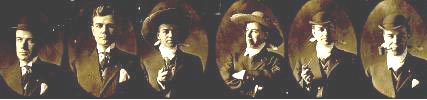
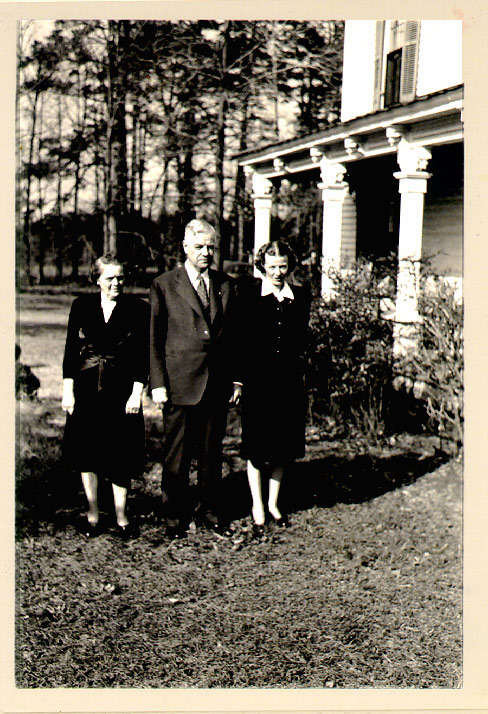
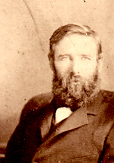
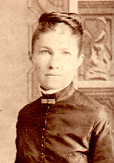
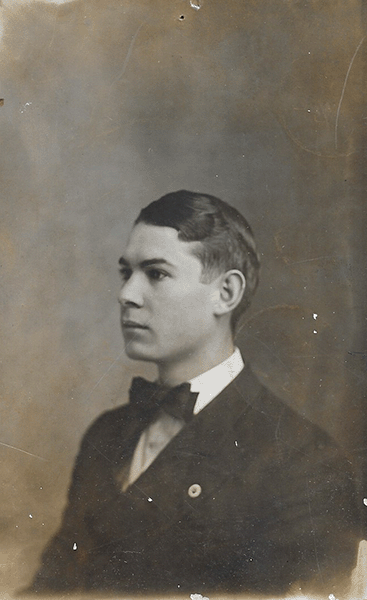
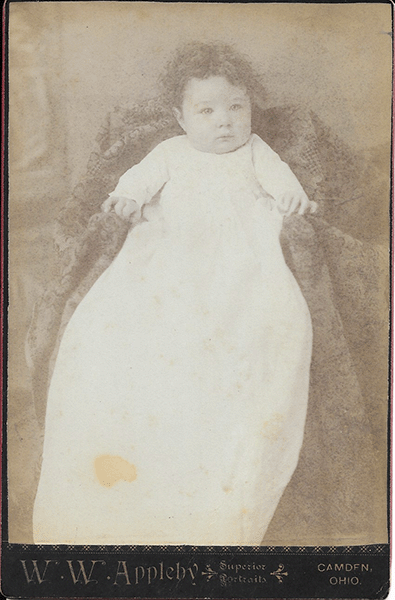
Born: 9 April 1881, the 2nd son of Watson Leach (#9) & Sarah Catherine Kenney (#10) in Delaware County, Ohio. Photos of Watson Leach (#9) & Sarah Catherine Kenney (#10) are shown below.
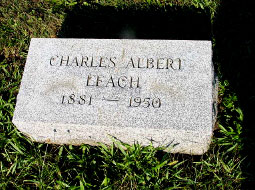
Died: 15 August 1950; he is buried at Union Cemetery, Columbus, Ohio.
[His siblings included:
a) Arthur (Art) Othello Leach: (Single) Born: 8 March 1876. Died: 20 August 1955, buried Memorial Park Cemetery, Tulsa, Oklahoma. For more information,click here.
(Photograph: courtesy of Sharon Hinckley, granddaughter of Belva Leach, Arthur's sister.
b) Estella Leach: Born: 14 September 1878. Died: 6 September 1886 - killed by kick of colt, buried Bloomfield Cemetery, Morrow County, Ohio. [Note: Charles would have been only 5 years old when his big sister was killed.]
c) Harold (Hal) Dean Leach: (Single) Born: 20 February 1884. Died: 24 May 1975, buried Bloomfield Cemetery, Morrow County, Ohio. For more information click here.
(Photographs are courtesy of Sharon Hinckley, granddaughter of Belva Leach, Harold's' sister).
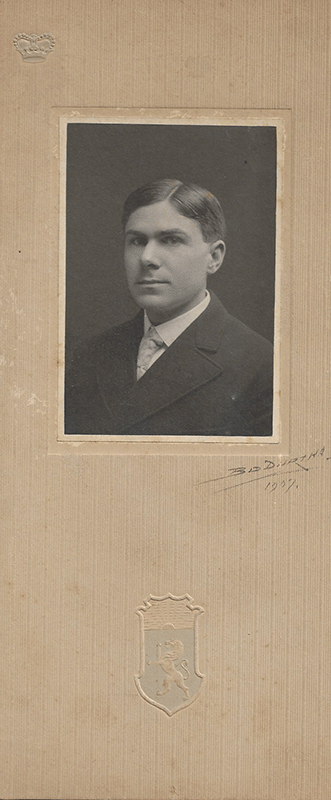
d) Homer Watson Leach: (Married: Blanche Ewers, 31 August 1911). Born: 10 January 1886 . Died: 12 March 1977, buried Rivercliff Union Cemetery, Mt. Gilead, Ohio; For more information, click here. (Photographs of Homer are courtesy of Sharon Hinckley, granddaughter of Belva Leach, Homer's sister).
e) Belva Lockwood Leach: (Married: Robert Hooker Spidel) Born: 30 June 1888 . Died: 24 February 1975; As told by Jane Webster (Belva's niece and Russell Leach #3's sister) to Susan Snyder (#2) on 2 November 2008, Belva was raised in Eaten, Ohio by an aunt, Louisa (Kenny) Conger and Uncle John Newton Conger after her mother died. She was only about 4 months old when her mother died. For more information about Belva, click here.
(Photograph of Belva is courtesy of Matt Kenney, Great Great Great Grandson of Albert Kenney).
f) Ralph Marion Leach: (Married: Olive Steinmetz, widowed and remarried) Born: 24 June 1890 of Watson Leach (9) & Edith Wood. Died: Centerburg, Ohio, 17 October 1956, buried at Centerburg Cemetery ] (Source of date of death and cemetery: www.findagrave.com) For more information about Ralph, click here.
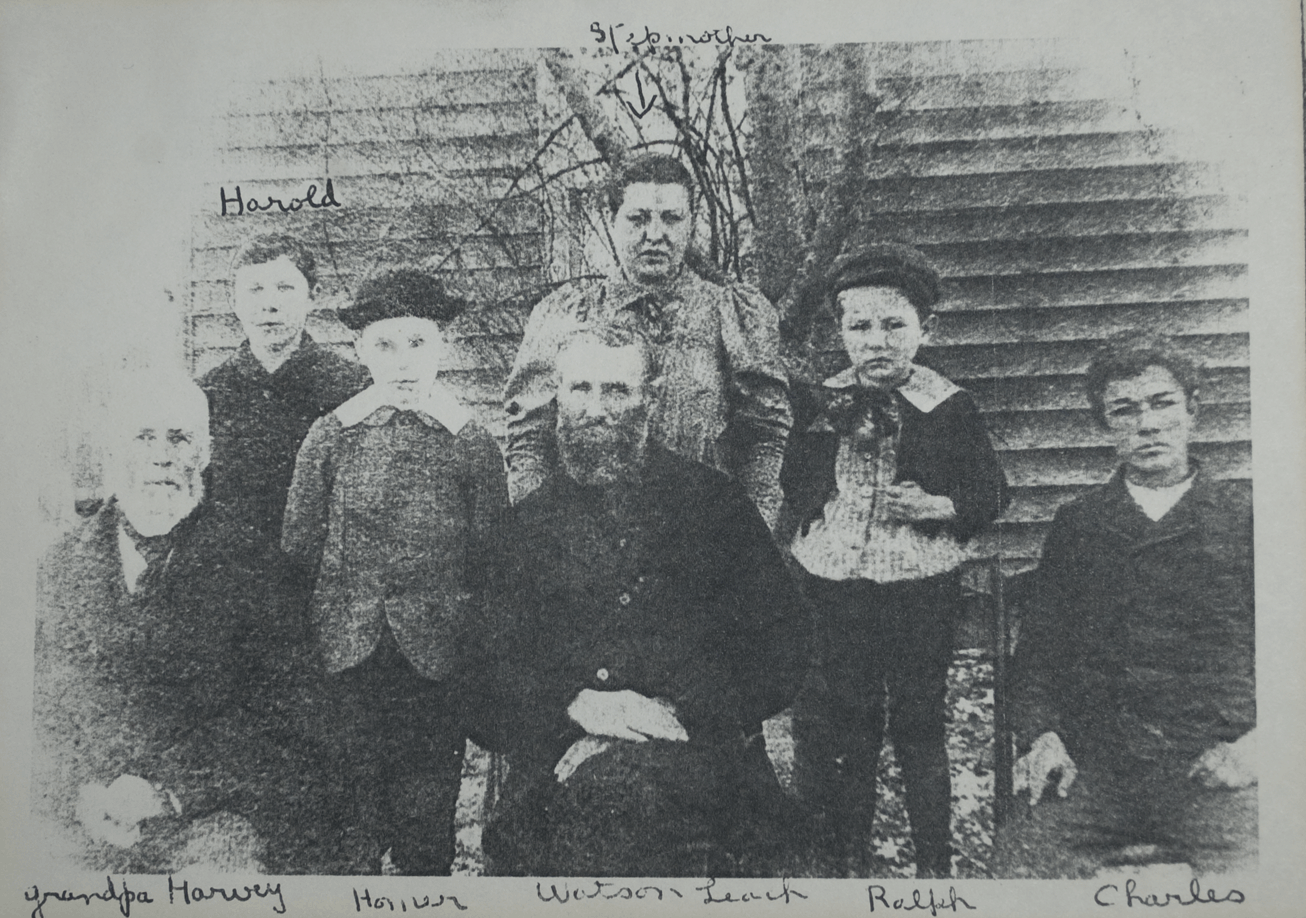
Below: This photograph was taken sometime between 1895 and 1899. Ralph was at least five years old in the picture and Harvey died in January 1899. Charles appears to be wearing the same jacket he was wearing in the school picture taken below. [Note: There are three generations of Leach men in this photograph:Harvey (#17), Watson (#9), and Charles, Harold, Homer, and Ralph. The woman in the photograph is Edith Wood, Charles' stepmother.]
Education: Charles graduated from Marengo High School in 1900.
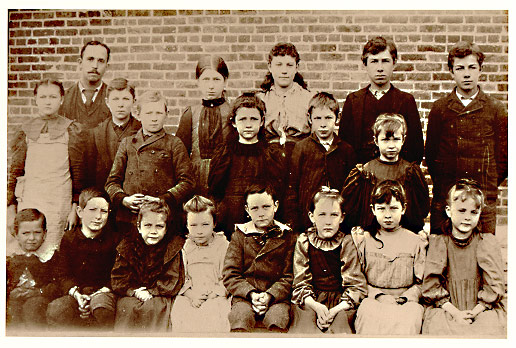
Below : Marengo, Ohio school photograph. Charles is in the top row at far right.
The 1900 Census shows Charles is 19 years old and living at home with his father (Watson), stepmother (Edith), brothers Harold and Homer, and half brother Ralph. Charles is listed as a being a teacher.
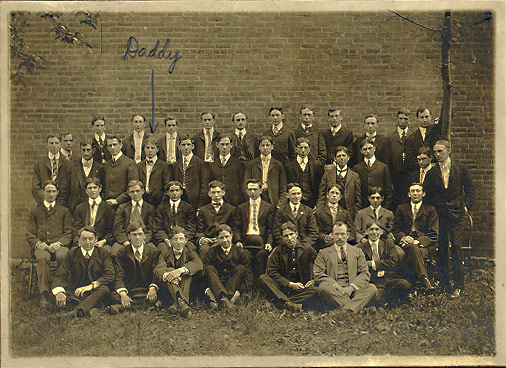
Below: Charles attended Ohio State University as a law student. He is labelled "Daddy" in the photograph.
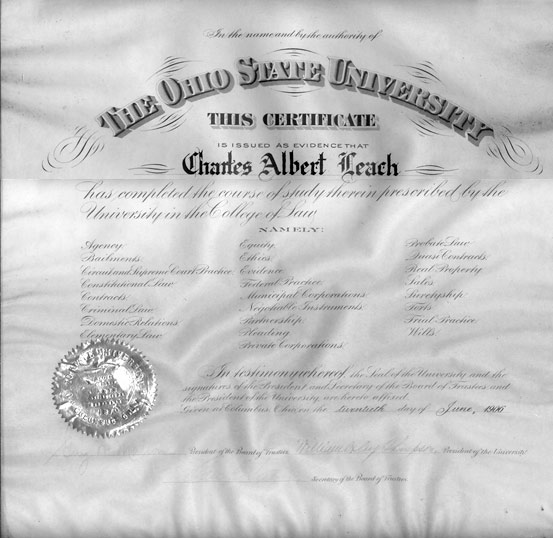
In 1906, he received a certificate of graduation from the Ohio State University College of Law.
Employment Summary [Note: a more detailed description is below]: During various stages of his life, Charles was a public school teacher, worked at Von Gerechten Glass Company, authored a legal digest for a legal publishing house, was Third City Attorney, a lawyer in private practice, Special Counsel in City Attorney’s office, First Assistant City Attorney, City Attorney of Columbus Ohio and a Common Pleas Judge.(Below right: This photograph was found among the possessions of his sister, Belva, by Belva's granddaughter, Sharon Hinckley, in 2022)
Honors, achievements, memberships: President of the Hunter Literacy Society while a student at OSU; President of the Buckeye Republican Club 1918; President of the Torch Club (a speaker’s club) 1941; author of “The Constitution and the Covenant" (Reply to Critics) in the Ohio Law Reporter, September 1, 1919, Vol XVII, # 23, author of “Trial Atmosphere” in the Ohio Bar (Publication of the Ohio State Bar Association) August 8, 1949 Volume XXII, #20 p. 290 [Note: This was later printed by the Kentucky State Bar Journal after Charles had died.],; Knights of Pythias (member of the Grand tribunal in this order); Elks; Chamber of Commerce; the Ohio State University Association; Humbolt Lodge of Masons (33 degree); Scottish Rite and Shrine; Columbus and the Ohio State Bar Associations (Chairman of the Judicial Section of the Ohio Bar ); Vice president of the Common Pleas Judges Association of Ohio; Presiding Judge of the Common Pleas Court.
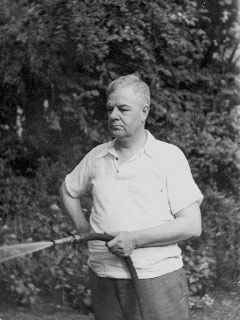
Hobbies: Charles liked to read, garden, do yard work, and smoke Dutch Master cigars.
Below: Charles had roses in his garden. The roses in this 2004 picture are in the garden of Susan Snyder (#2) (Charles’ granddaughter). Susan’s roses were started from cuttings from plants in the garden of Helen Leach (Susan’s mother). Helen started her roses by making cuttings of Charles’ roses.
Miscellaneous (This section of his biography describes additional details of his life):
Charles was born on his father’s farm in Delaware County. When he was old enough, he attended a one-room school house to get an education.[Note: Charles was seven years old when his mother died in 1888]. One day, when he was 15 years old and seated on a mowing machine, cutting hay on his father’s farm, he pulled the horses to one side in the shade of a tree where he could be more comfortable and think. When he wheeled out into the field again, he had made up his mind. He would become a lawyer.
He continued with his education and graduated from Marengo High School.
A poem written by Charles appeared in the Morrow County Sentinel on 17 May 1900. At left is the actual news article. To the right of that is the transcription.
“COMMENCEMENT TIME
My High School Friends,
Hath noticed that the time approacheth
When thou shalt go to take the chances of the world?
Soon the season comes
When the flowers whose tiny frames
Thou hath dissected with microscopic scrutiny,
Shall serve as decorations
For the end-Commencement.And are the time shall come
When thou for the last time
Shall listen to the bell that clangs for you,
Gaze once again ‘round
Those familiar walls,
Out on the play ground thro’ the halls,
And think of times gone by
When youth was young.The hall is crowded
And the gayest of the gay are there;
Mid many decorations you must sit
Upon your chair and wait your turn.
The draperies and the colors of your class
Are twined about the Stars and Stripes
Thro’ the open casement from afar comes ?
Upon the wind the scent of wild flowers,
And a sea of faces look into your eyes.With inspiration now your part you do,
Your effort is not lost upon the crowd;
The pompous class address is through,
‘Mid strains of music bursting forth so loud.
Diplomas now are handed ‘round
And all the long and studious years;
It seems to you, success has crowned;
Amidst applause and High School cheers
One proudest moment of your life been found;
And then congratulations come.And now the banquet hall
With shimmering lights,
And gayest music and frivolities;
And mirth and toasts
And fairy beauties at Commencement ball,
And over glittering present.
Like tornado’s cloud, and all unnoticed,
The future hangs.And as the seed is burst upon the thistle down,
And scattered wide upon the distant fields,
Far from the place of their nativity,
So also far scattered o’er the distant fields of mother earth,
In different avocations, different ways,
Pursuing rainbow ends and fame omnipotent,
And making friends and gaining wealth and power,
Thy class will go.But in thy diverse wanderings o’er the earth,
Forget thou not the friends thou made in earlier days,
The deep foundation stones thou laid in place;
The happiness untold of care-free High School life,
And all the sacred memories thou hold
Of days gone by.
Charles Albert Leach
Peerless, O-May 1900."
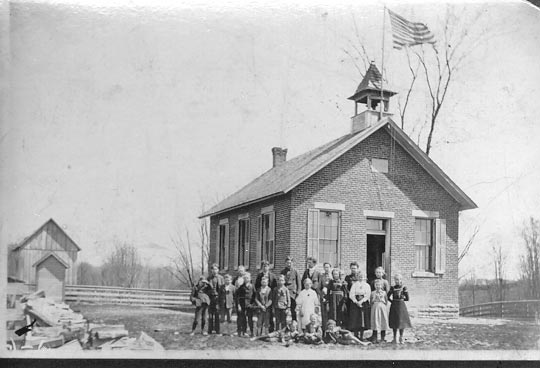
After taking a teacher’s examination, he returned to the one-room school, that he had attended, to instruct classes. Some of his students included his former fellow students, including his brothers. He taught for two years and made $25 a month the first year and $33.33 a month the second year. His intent was to earn enough money be able to attend Ohio State University law school.
.
Below: Charles standing in back (center) of his class of students
.
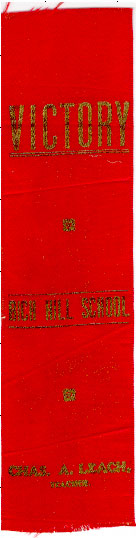
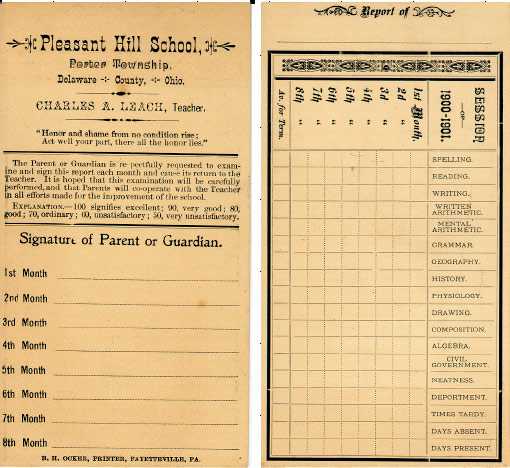
Below: Teaching ribbon and front and back of a report card from Pleasant Hill School
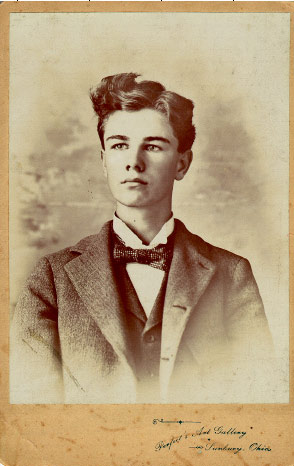
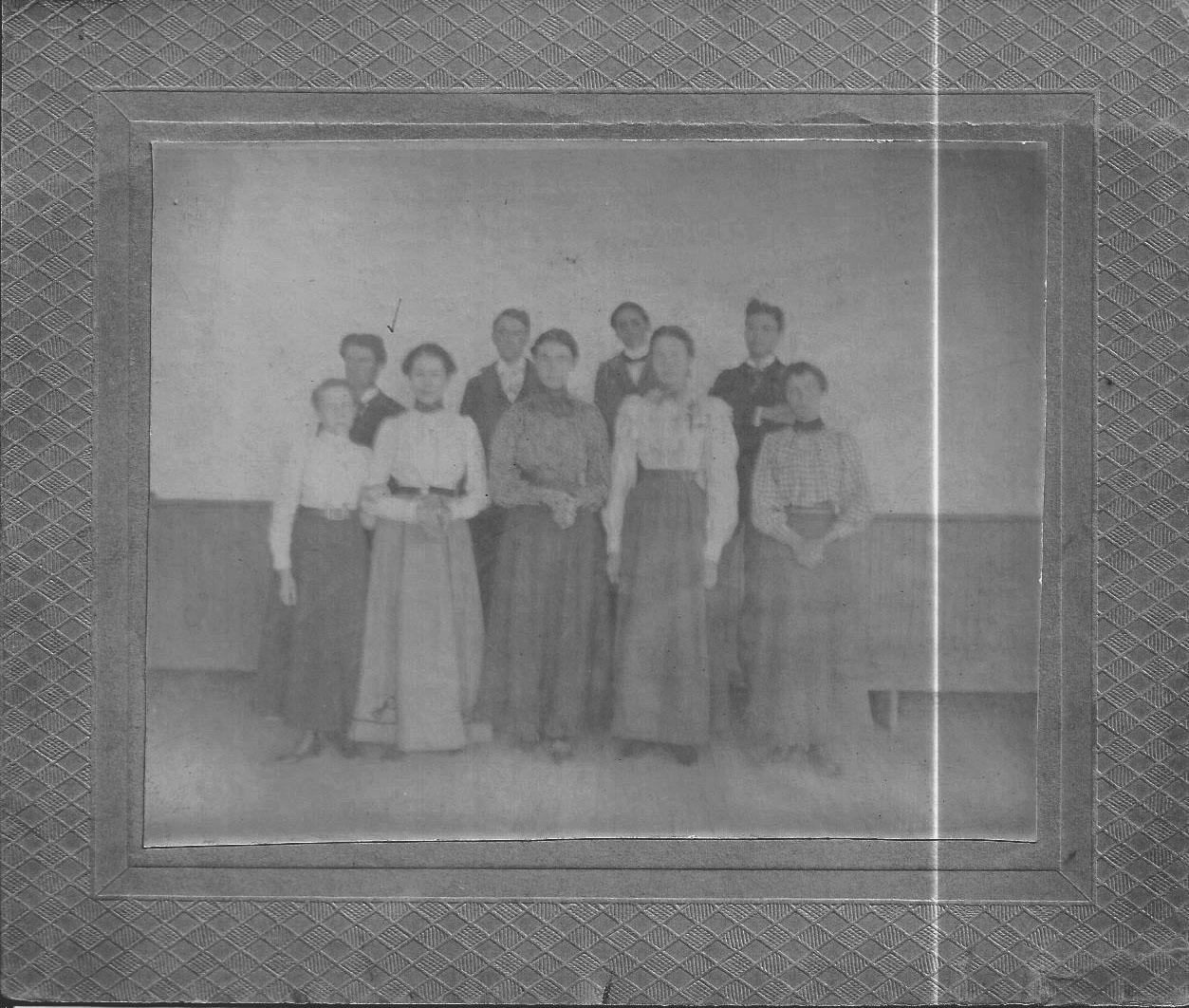
Below: This photograph was found in an old trunk that had belonged to Jane Leach Webster, Charles' youngest daughter. It is unknown when this photo was taken, but it may be from the time when Charles graduated from high school or when he began teaching. The check mark locates Charles in the image.
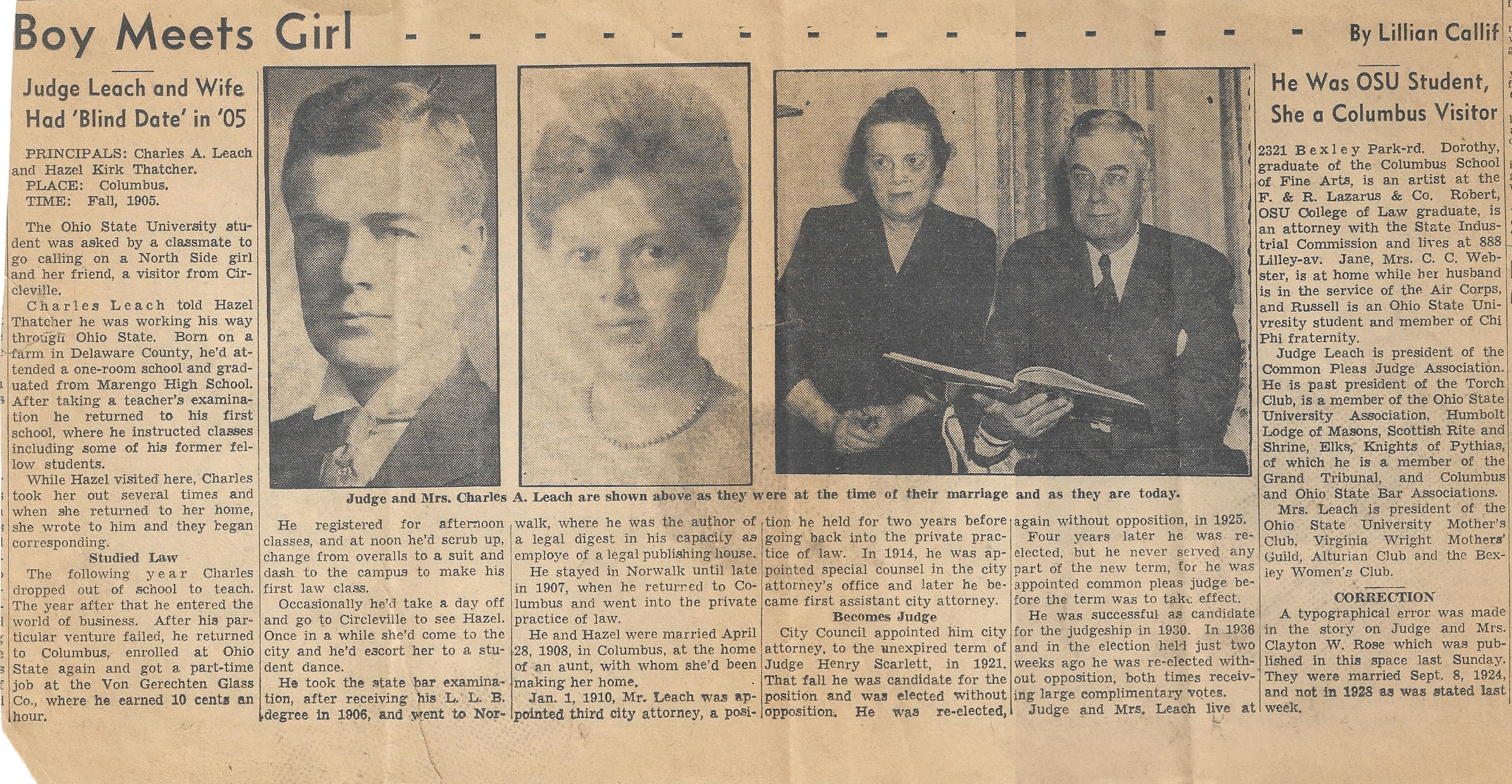
In the fall of 1905, Charles was attending OSU and working his way through college when he was asked by a classmate to go calling on a North Side girl and her friend, a visitor from Circleville, Hazel Thatcher. While Hazel visited there, Charles took her out several times and when she returned to her home, she wrote to him and they began corresponding.
Below: This article was found in an old trunk that had belonged to Jane Leach Webster (Charles' youngest daughter). It documents how Charles met Hazel and other details of his life..
The following year Charles dropped out of school to teach again and earn more money. The year after that he entered the world of business. After his particular venture failed, he returned to Columbus, enrolled at Ohio State again and got a part time job at the Von Gerechten Glass Co., where he earned 10 cents an hour. He registered for afternoon classes, and at noon he’d scrub up, change from overalls to a suit and dash to the campus to make his first law class. Occasionally he’d take a day off and go to Circleville to see Hazel. Once in a while she’d come to the city and he’d escort her to a student dance.
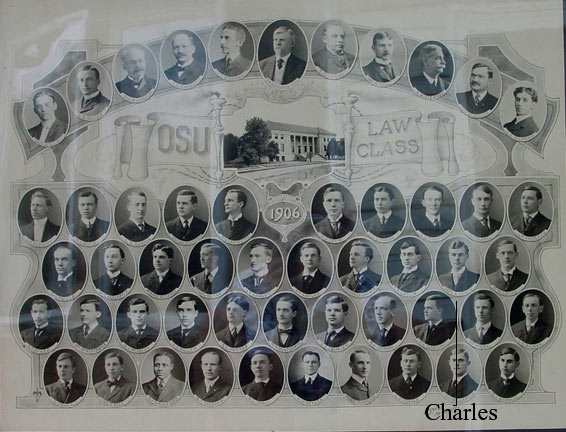
He graduated from college in 1906, receiving a certificate in law. He did not receive a law degree since he had attended only law school and had never earned a Bachelor’s degree first. (This affected him for the rest of his life. He told his sons .. Robert and Russell.. to get degrees. Charles considered a degree to be very important, and he wished he had gotten one.)
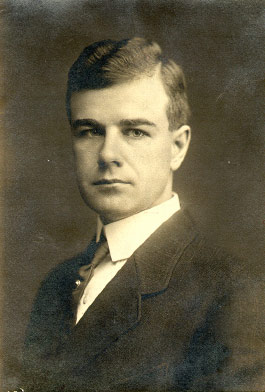
Below: Image 1: The 1906 graduating law class of Ohio State University. This photograph was donated by Susan Snyder #2 to the OSU Law Library following the death of Russell Leach #3, the youngest son of Charles, and at the request of Russell. Image 2: Enlarged photo of Charles from the law school photograph.
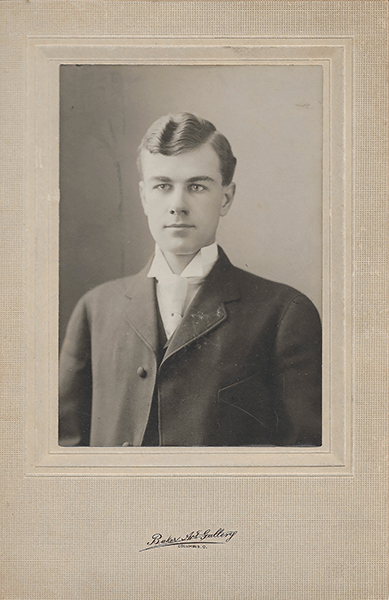
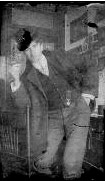
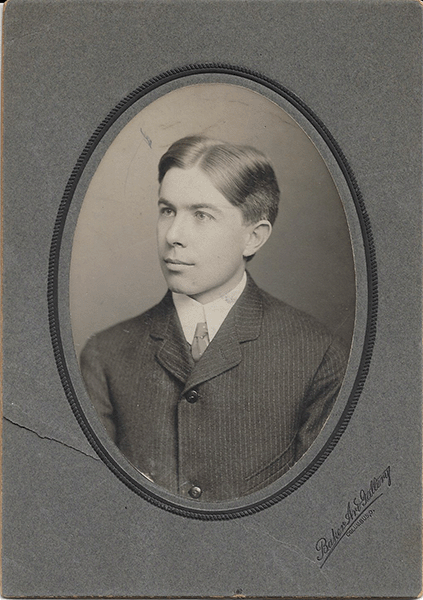
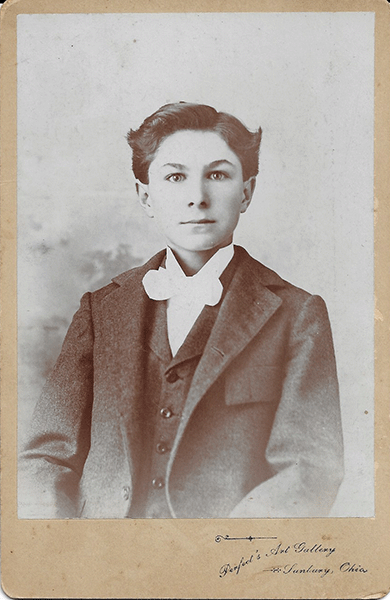
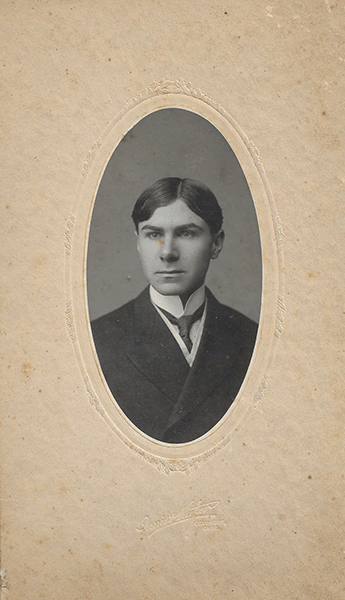
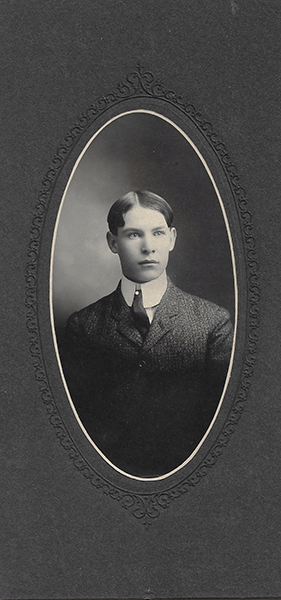
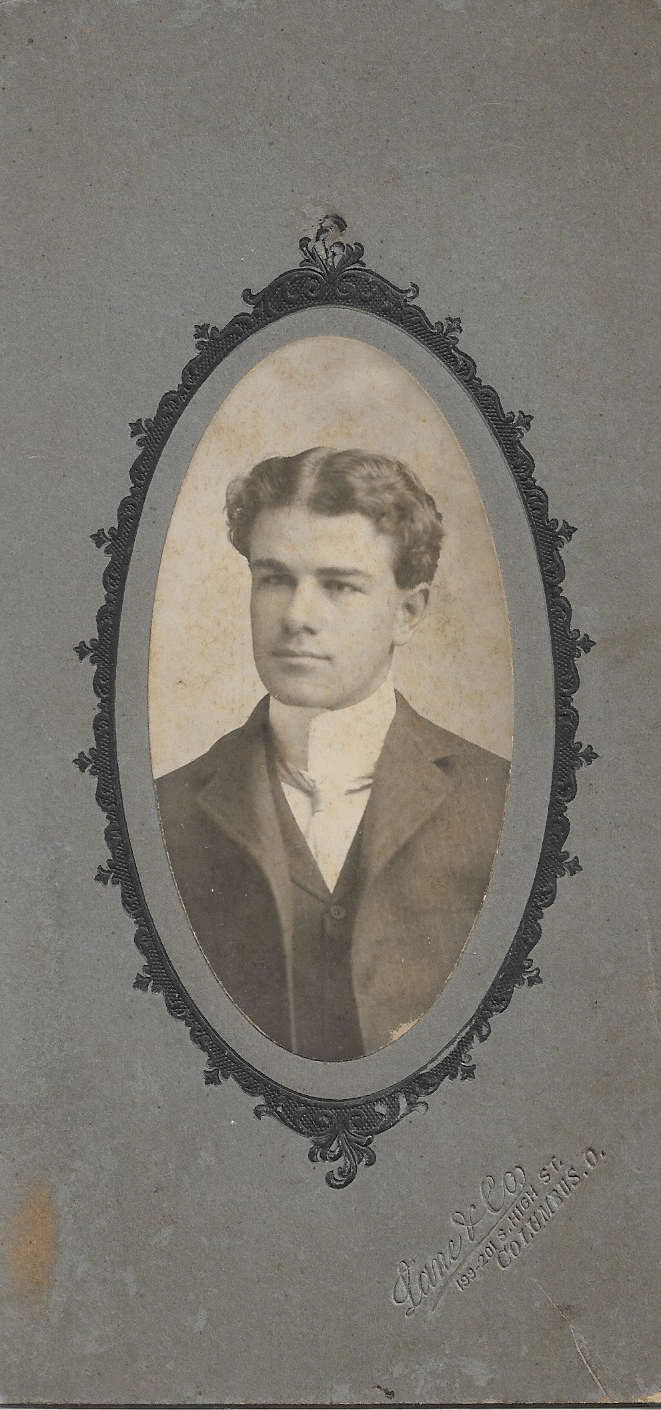
Below is the photograph of Charles used in the photograph of the class above. This copy was found among the possessions of his sister, Belva, by her granddaughter, Sharon Hinckley, in 2022. In 1906, when Charles was in graduating law class, Belva was in high school.
Below: The Ohio State University Certificate presented to Charles in 1906.
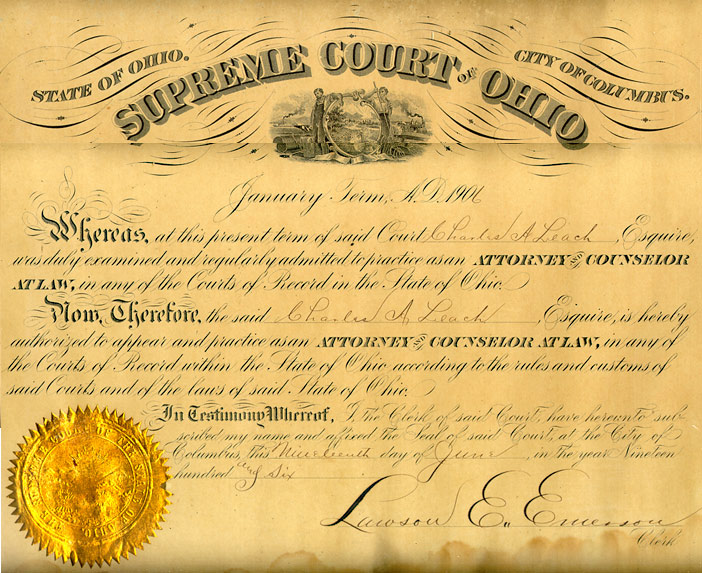
Charles took the state bar examination in 1906, and went to Norwalk, where he was the author of a legal digest in his capacity as employee of a legal publishing house. He stayed in Norwalk until late in 1907, when he returned to Columbus and went into the private practice of law.
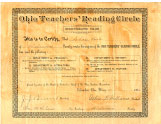
Below: This certificate, dated January Term, A.D. 1906, entitled Charles to practice law in the state of Ohio.
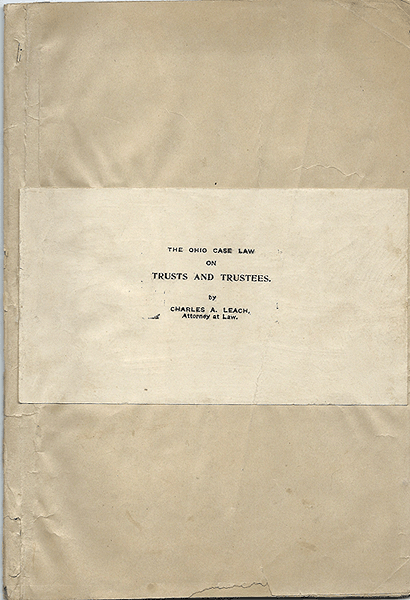
Below: Among belongings saved by Charles and found in 2015 by his granddaughter (Susan) was the pamphlet below. It was titled "THE OHIO CASE LAW ON TRUSTS AND TRUSTEES by CHARLES A. LEACH, Attorney at Law. It was dated 1906. It is presumed that this is a copy of a legal digest created while Charles was working for the legal publishing house in Norwalk, Ohio.
[Note: Charles' father died in 1907 when Charles was 26. His father would have known that he was a lawyer and was probably very proud of his son.] Jane Leach Webster (youngest daughter of Charles) remembered a family story and related it to Susan Leach Snyder ... when Charles and his brothers came home from attending their father's funeral in 1907, their step mother locked them out of the house. The boys hoisted the smallest brother into a window and he retrieved the family Bible. It is unknown where the boys went to live ... but the Kenney family (their grandparents on their mother's side) lived nearby. Perhaps they went there.
Left and Below: Pictures of Charles goofing around.
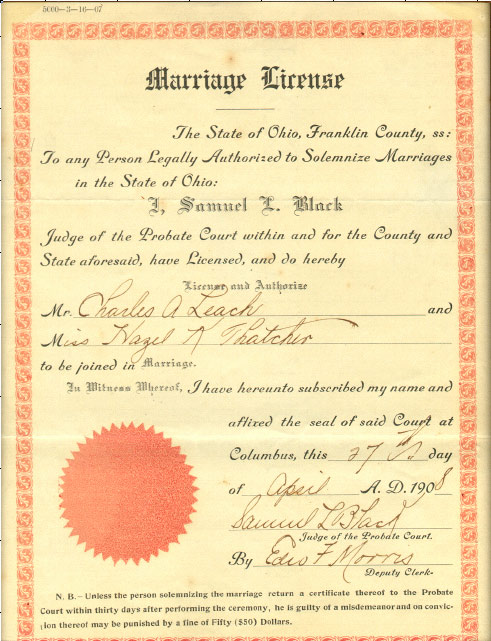
Charles and Hazel were married April 27, 1908, in Columbus, at the home of an aunt, with whom Hazel had been making her home.
Below: Charles' and Hazel's marriage license.
January 1, 1910, Charles was appointed Third City Attorney, a position he held for two years before going back into the private practice of law.
Also in 1910, Charles became a father for the first time. Below is a photograph of Charles and baby Dorothy. The photograph was found in the old trunk that had belonged to Jane Leach Webster.
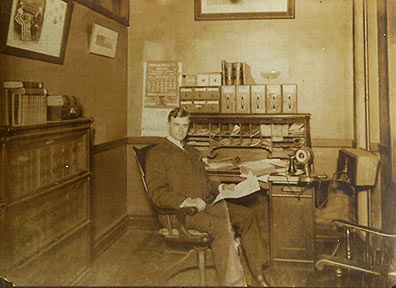
The 1910 United States Census lists Charles as a City Solicitor Assistant. He and his Hazel are living at 959 East Mount Street. They are renting the house. Hazel and Charles have been married 2 years.
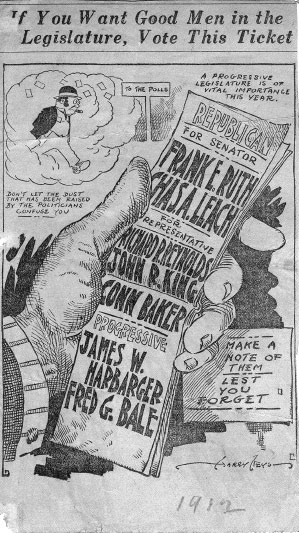
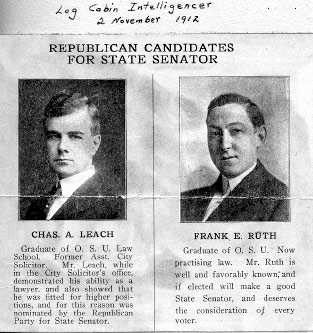
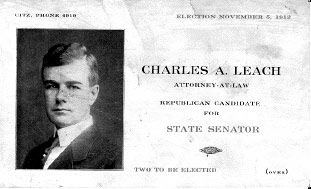
In 1912, Charles ran for Ohio Senate, but he did not win that election.
Below: Image 1: An editorial Cartoon in 1912 lists Chas. A. Leach as running on the Republican ticket for Senator. It states "If You Want Good Men in the Legislature, Vote This Ticket... A progressive legislature is of vital importance this year." Image 2: An Article in the Log Cabin Intelligencer on 2 November 1912, shows the two Republican Candidates for State Senator and it describes their credentials. Image 3: One of Charles' Campaign Cards.
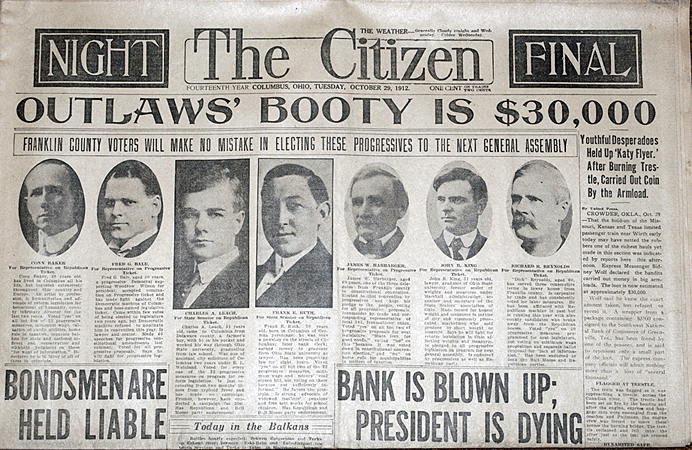
Below: The Citizen newspaper, dated October 29, 1912 shows seven candidates for election and titles this section: "FRANKLIN COUNTY VOTERS WILL MAKE NO MISTAKE IN ELECTING THESE PROGRESSIVES TO THE NEXT GENERAL ASSEMBLY." Charles is the third candidate from the left. An enlargement of his photograph and description and an transcription is below.
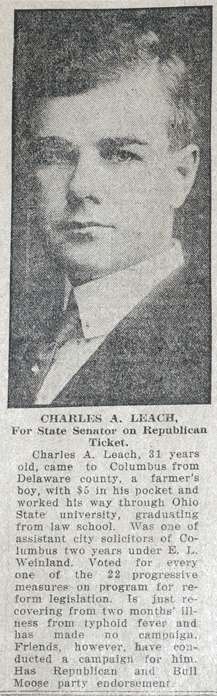
CHARLES A. LEACH,
For State Senator on Republican Ticket
Charles A. Leach, 31 years old came to Columbus from Delaware county, a farmer's boy, with $5 in his pocket and worked his way through Ohio State university, graduating from law school. Was one of assistant city solicitors of Columbus two years under E. J. Weinland. Voted for every one of the 22 progressive measures on program for reform legislation. Is just recovering from two months' illness from typhoid fever and has made no campaign. Friends however, have conducted a campaign for him. Has Republican and bull Moose party endorsement.
In that election, he was defeated by his Democratic opponent. In January, in the capacity of special council, he resumed his connection with the office of city solicitor. (See link:History of Franklin County, Ohio by Opha Moore, 1930)
In 1914, Charles was appointed Special Counsel in the City Attorney’s office and later he became First Assistant City Attorney.
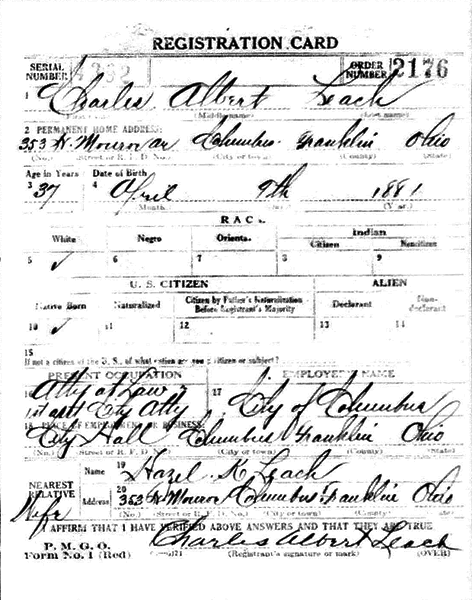
In 1914, World War I began. Three draft registrations were conducted between 1917 and 1918. The first took place on June 5, 1917 for men between 21 and 31. The second was held on June 5, 1918 for men who had turned 21 after the first registration. The third was held on September 12, 1918 for men between the ages of 18 and 45. Charles was 37 years when the third draft took place.
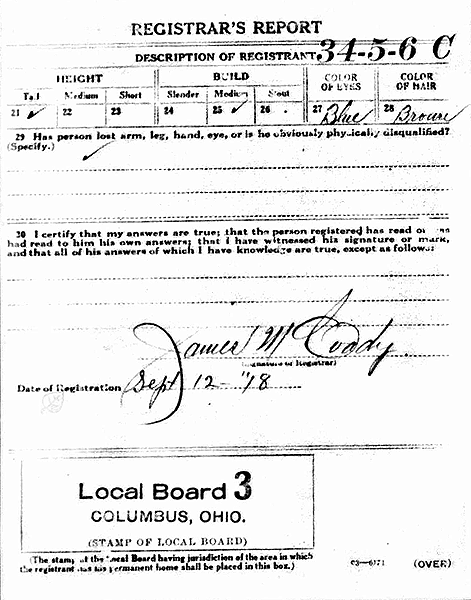
Below: Charles' Registration Card shows the Order Number is 2176. His Permanent Home Address is listed as 353 ? Monroe Av. Columbus, Franklin Ohio. Age in Years: 37. Date of Birth: April 9th 1881. He is White and Native Born. Present Occupation: Atty at Law 1st asst City Attorney City of Columbus. Place of Employment: City Hall, Columbus Franklin Ohio. Nearest Relative: Hazel K. Leach, Wife. Address: 353 ? Monroe Av. Columbus Franklin Ohio. It is signed by Charles Albert Leach. His height is tall and his build is medium. Color of Eyes: Blue. Color of Hair: Brown. The signature of the registrar is James M ? . The date on the report is Sept 12 "18.
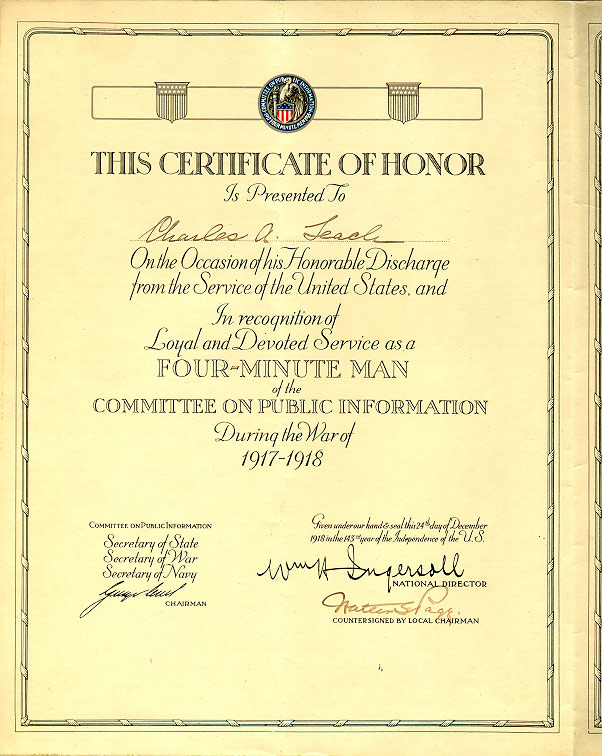
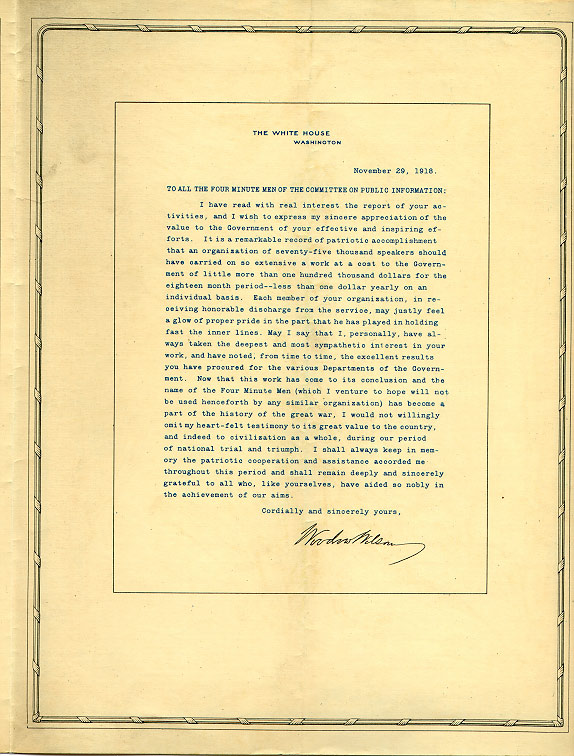
Below: In 1918, Charles received this honor for belonging to an organization of speakers in the US that served on the Committee on Public Information during the War of 1917-1918. The certificate is signed by several dignitaries, including Woodrow Wilson.
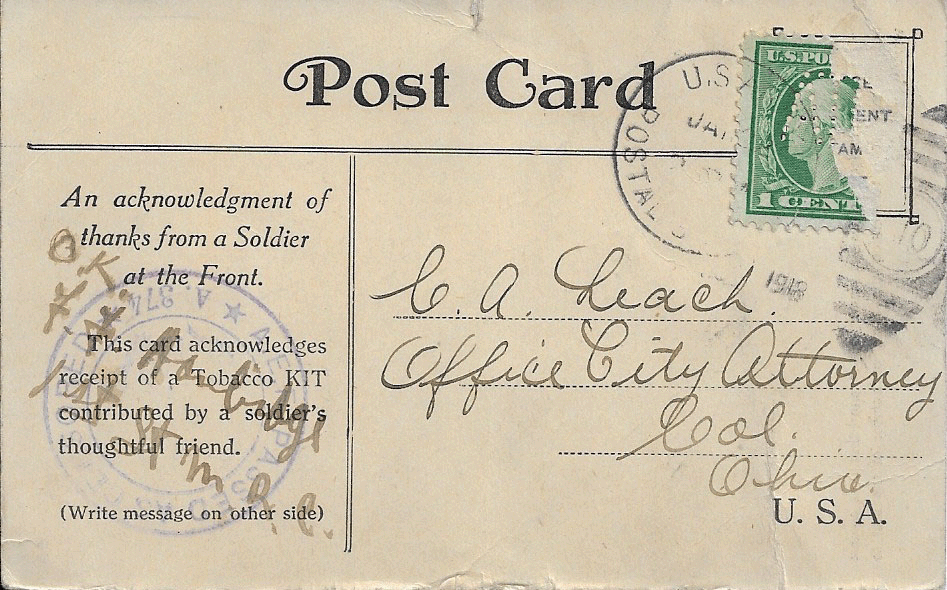
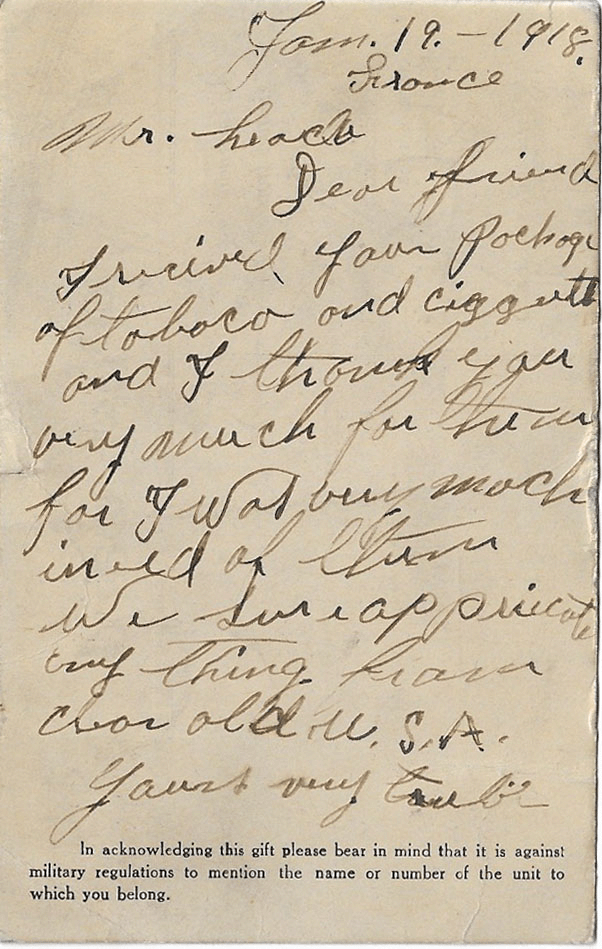
Also in 1918, Charles received the post card below from a soldier serving in the war. The address portion of the card acknowledges that Charles was the City Attorney of Columbus. The letter portion of the card states, "Jan. 19-1918 France...Mr. Leach...Dear friend Received your package of tobaco and ciggerts and I thank you very much for them for _____?_______of them. We sure appreciate any thing from dear old U.S.A. Yours very _?__"
Below: This postcard was found in the old trunk belonging to Jane Webster Leach.
The 1920 United States Census list Charles as an Attorney in the Office of City Attorney. He and Hazel are renting a house at 353 Monroe Avenue. They have three children: Dorothy, Robert, and Jane.
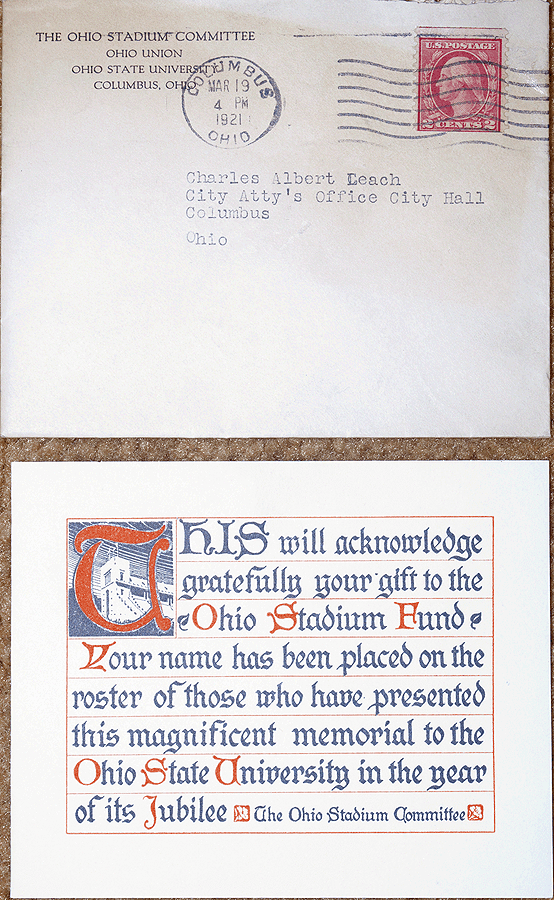
Charles was an Ohio State University Football fan. It is unknown exactly when he got the "Buckeye Bug, " but he was a fan as an adult and passed that on to his children. In 1921 when the The Ohio State University needed money to build a stadium, Charles chipped in as is indicated by the 'thank you" message below:
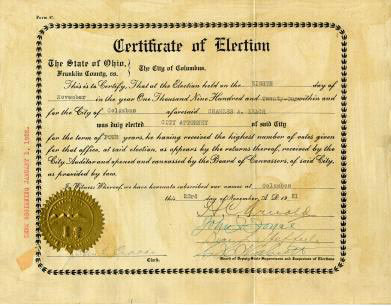
In 1921, City Council appointed Charles as City Attorney, to the unexpired term of Judge Henry Scarlet. That fall, he was candidate for the position and was elected without opposition. He was re-elected, again without opposition, in 1925. [Note: Click here to see Charles' letter to the Deputy State Supervisors and Inspectors of Elections of Franklin County, Ohio written in August 20th, 1921 accepting candidacy as City Attorney and for the front and back of one of the nominating petitions for election dated 1925].
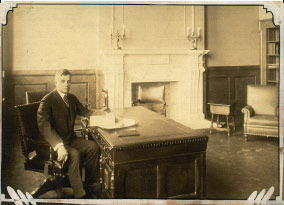
Below: City Attorney Charles A. Leach and the Certificate of Election, dated January 1, 1922..
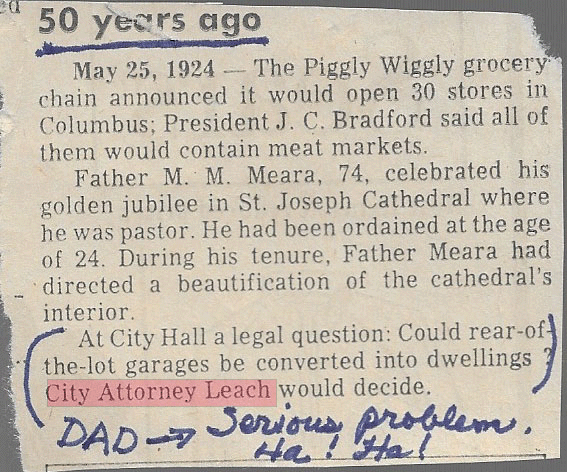
One of the Columbus, Ohio newspapers ran a column titled "50 years ago". This one, printed in 1974 (24 years after Charles died) referred to a decision that the 1924 City Attorney (Charles) would have had to make.
Below: This article was found in an old trunk that had belonged to Jane Leach Webster
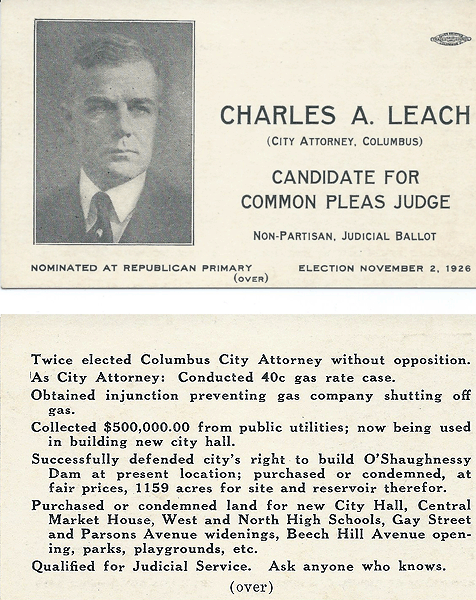
In 1926, Charles ran for Common Pleas Court judge. He did not win the election.
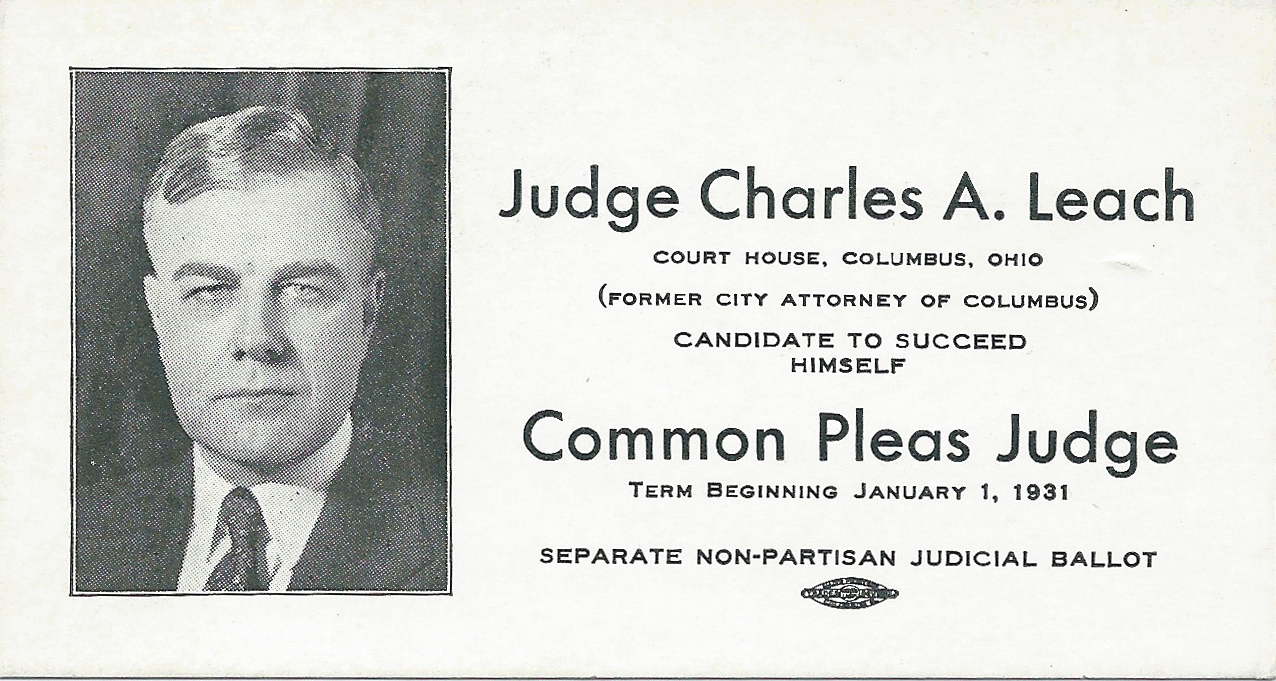
Below: The front and back of a campaign card advertizing that CHARLES A. LEACH, City Attorney, Columbus, was a CANDIDATE FOR COMMON PLEAS JUDGE.
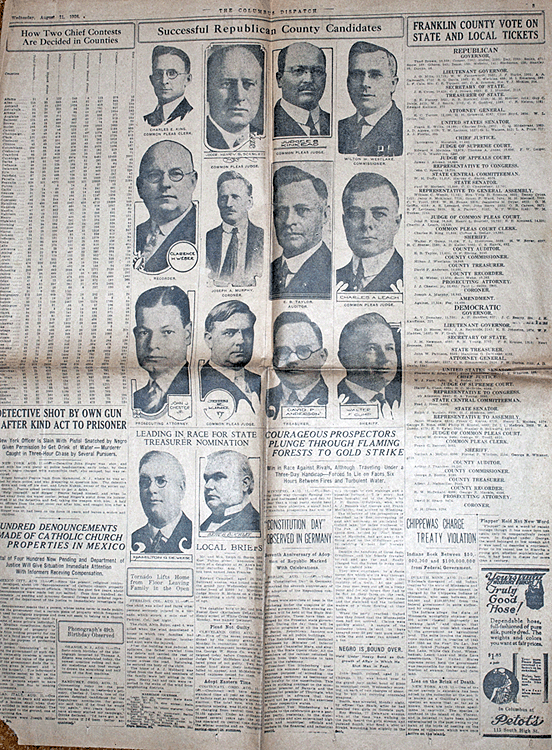
Below: Although Charles did not win the election, The Columbus Dispatch, August 11, 1926 paper announced the "Successful Republican County Candidates." In the second row at far right is Charles. The photograph that was used by the newspaper is the one at left.
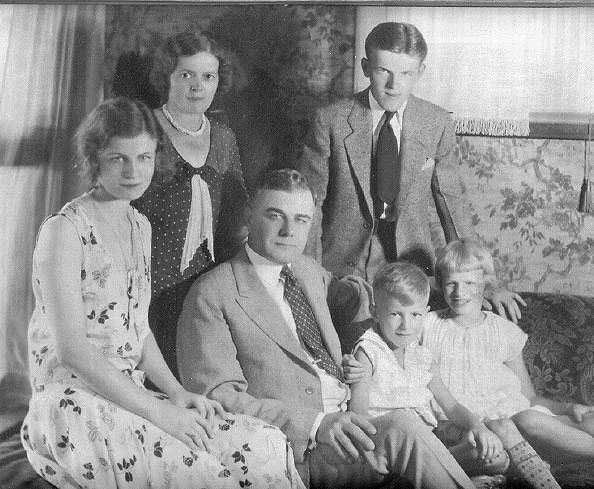
Below: Charles with his family circa 1928. From left to right: Dorothy Ann Leach (oldest daughter), Hazel Kirk Thatcher (wife), Robert Edmund Leach (oldest son), Russell Leach (youngest son), and Jane Carol Leach (youngest daughter).
As many parents have done, Charles signed his children's grade cards. Below is his signature as it appeared on one of Dorothy's cards.
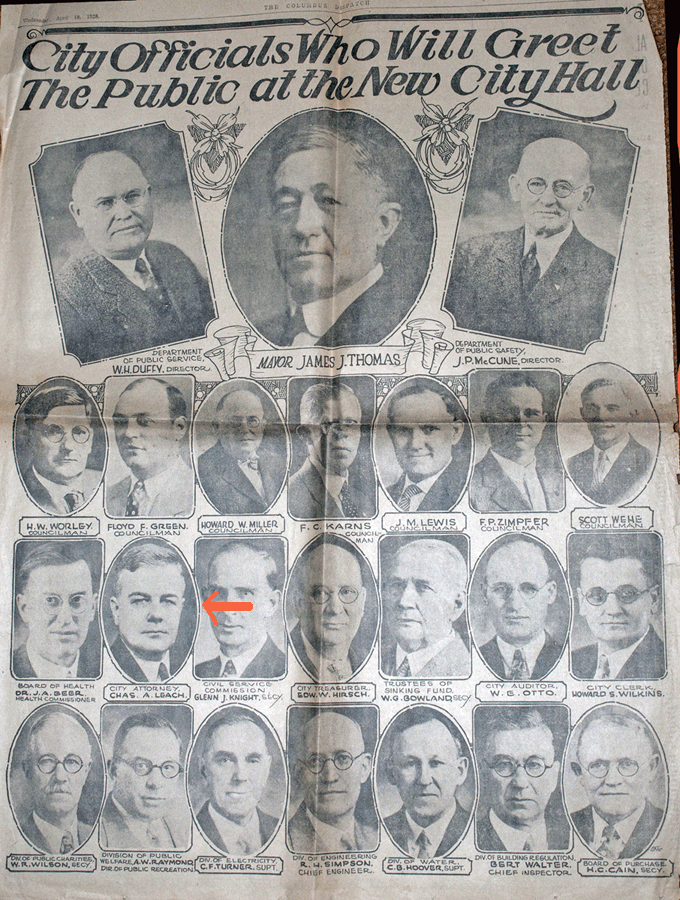
Below: One entire page of the Columbus Dispatch newspaper, dated April 18, 1928, is titled "City Officials Who Will Greet The Public at the New City Hall." Among the officials is "City Attorney Chas. A. Leach."
In the 1929 unopposed election for City Attorney, contributions to Charles’ election totaled $190.00, and total expenditures totaled $303.59. Expenditures included: postage ... $4.84 and petitions ... $7.50. Other costs included advertising in a variety of publications and other miscellaneous expenses.
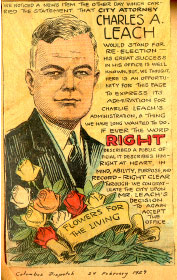
Left and Below: Editorial Cartoon: Columbus Dispatch 24 February 1929. Below Right: City Attorney Card.
During the nine years Charles was City Attorney, Columbus was rapidly growing. He was in charge of bond issues, contracts, and the acquisition of all the land from the site of the dam to Belle Point for the construction of the O’Shaughnessey Reservoir. He had a similar role with the construction of the new City Hall and the Columbus Airport. Acting for the city, he acquired the sites for many playgrounds and parks. As Attorney for the Board of Education, he performed similar services in connection with the construction of North, South, East, Central, and West High Schools. While acting as City Attorney or Assistant City Attorney, he was in charge of annexation proceedings which more than doubled the area of Columbus.
Left: Newspaper Feature: “INTERESTING FOLKS IN COLUMBUS - 63", The feature states: "IN HIS FOUR AND A HALF YEARS AS CITY ATTORNEY HE HAS BOUGHT MORE PROPERTY FOR CIVIC IMPROVEMENTS THAN ANY OTHER CITY ATTORNEY. HE HAS BEEN THRU NUMEROUS BATTLES WITH PUBLIC UTILITIES AND HAS COLLECTED $500,000 FOR THE CITY IN FRANCHISE TAXES, ETC. HE IS LEGAL ADVISOR TO COUNCIL AND ALL THE CITY OFFICIALS."
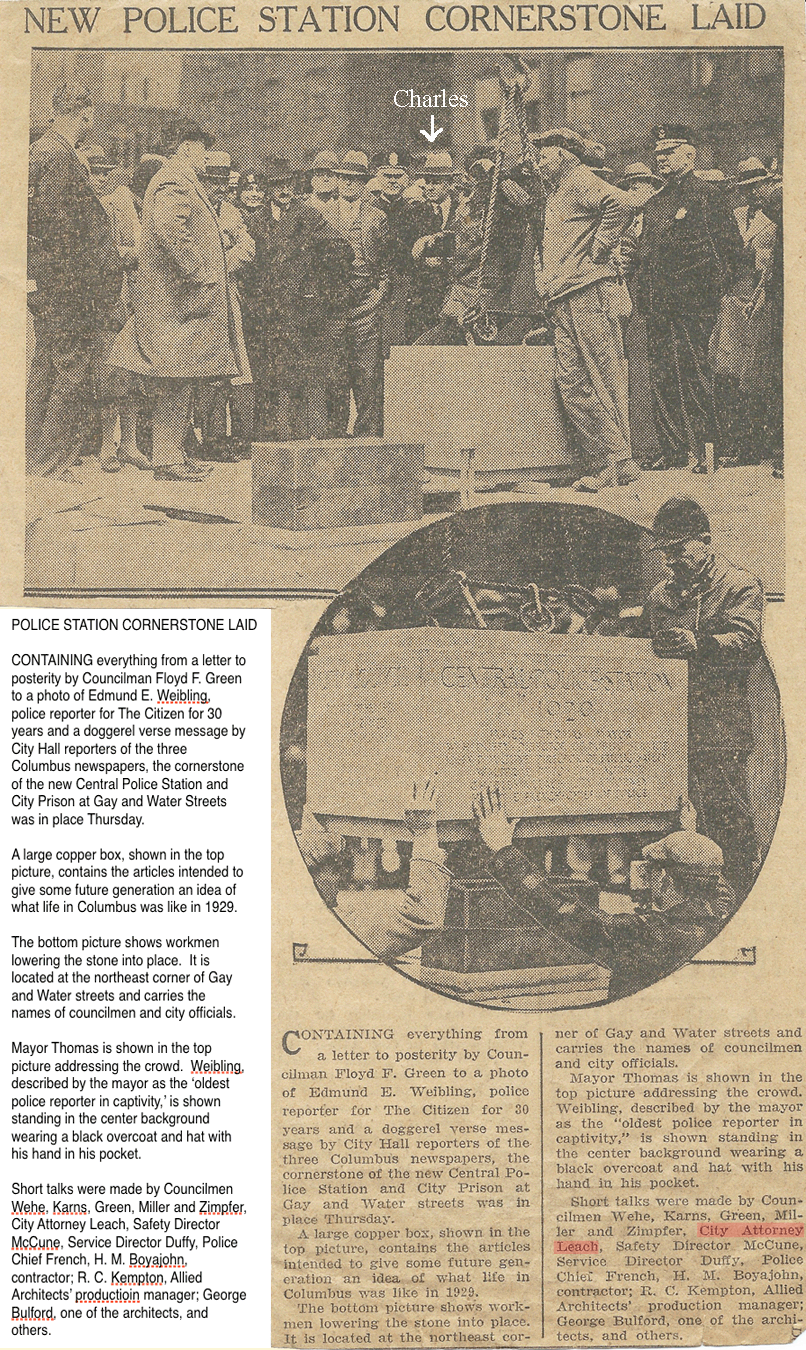
Below: A news article, titled "NEW POLICE STATION CORNERSTONE LAID," and the transcript of same describe the 1929 event. City Attorney Leach was one of the many who spoke at that event.
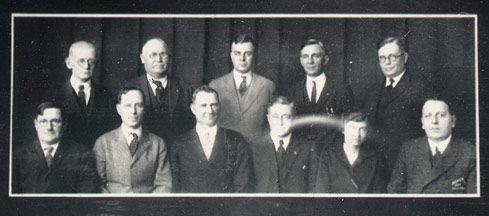
Below: Top Row: Col. William Duffy, ??, Charles Leach (City Attorney), ?? , ??. Bottom Row: Floyd Green, Judge Gessaman, ??, Mayor Thomas, Minnie Rolley (Rawley?), ??.
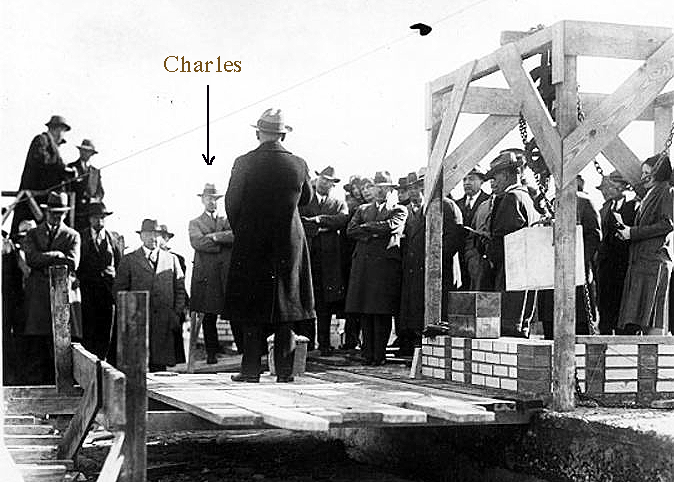
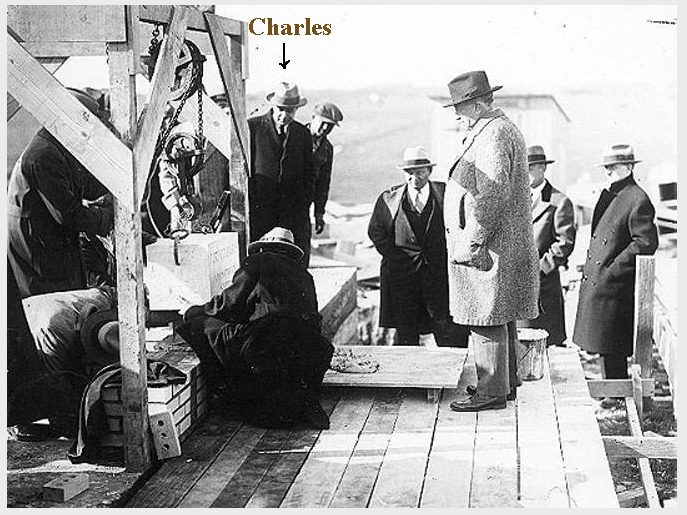
As described in a news article, dated April 18, 1929, Charles participated in laying the cornerstone of the administration building of Port Columbus Airport. “At the ceremony, Councilmen Floyd F. Green, John E. Davis, Ralph Kempton, and City Attorney Leach expressed gratitude to the citizens of Columbus for their foresight in voting for the Municipal Airport bond issue last November. “
Below: Mayor James Thomas lays the cornerstone at Port Columbus Airport. The groundbreaking was April 18, 1929. The photographer was Myron Seifert. These two photographs are Courtesy of The Columbus Metropolitan Libraries Digital Collection.
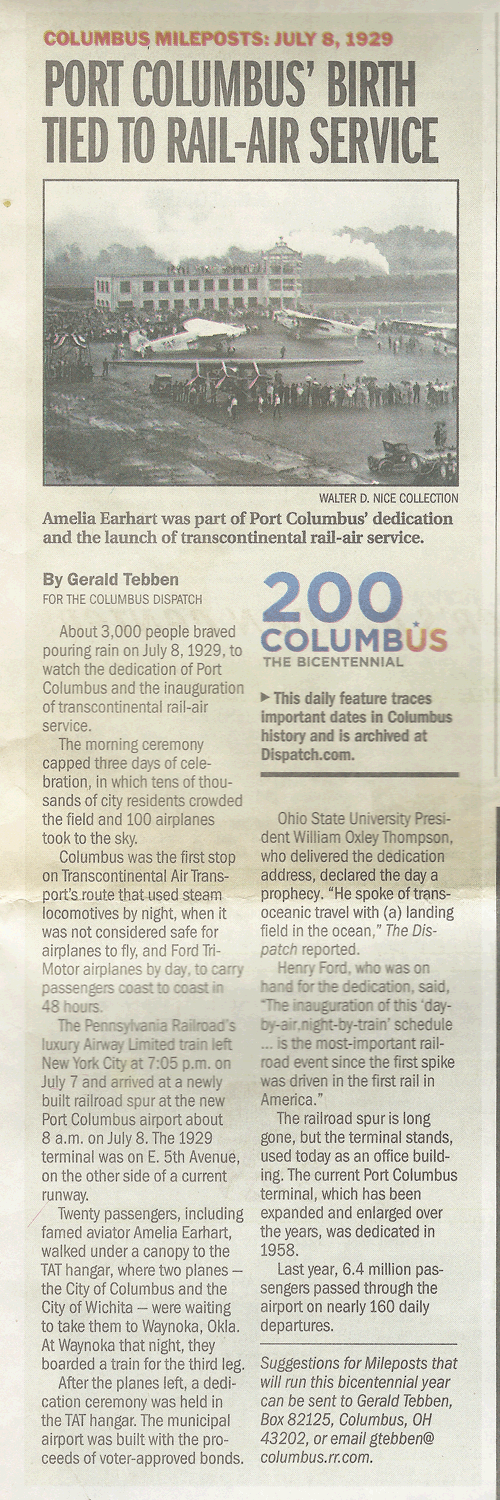
Below: This article appeared in the Columbus Dispatch on July 8, 2012. It describes the first flight at Port Columbus that occurred on July 8, 1929. Charles was on one of these two planes and no doubt met Henry Ford and Amelia Earhart.
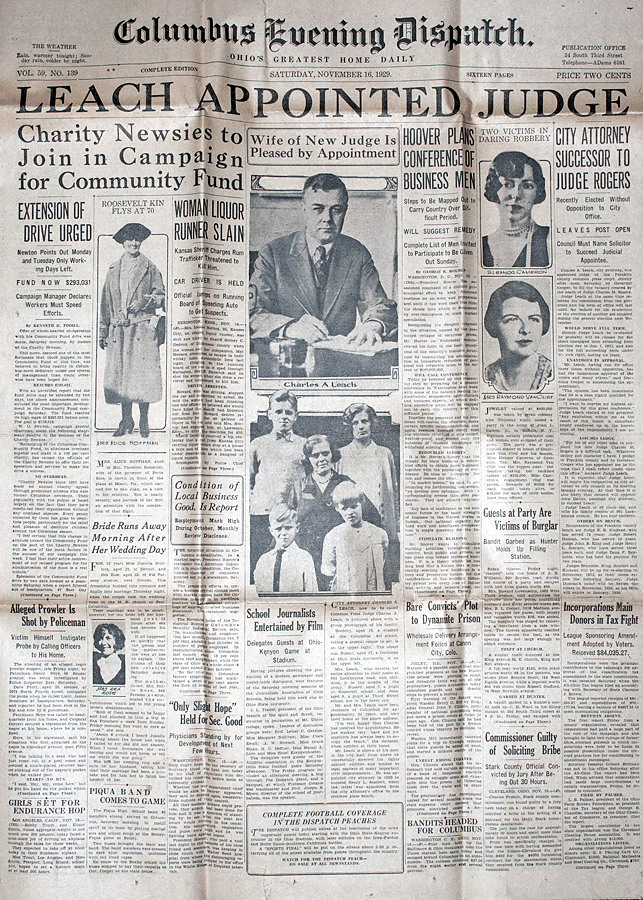
In 1929, Charles was re-elected, but he never served any part of the new term, because in November before the new City Attorney term was to begin, he was appointed Common Pleas judge to be the successor to deceased Judge Rogers.
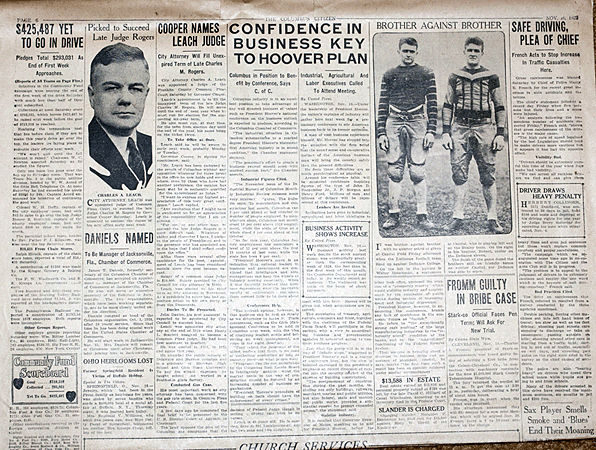
Below: The headline of the front page of the Columbus Evening Dispatch on November 16, 1929 is "LEACH APPOINTED JUDGE." [To see an enlarged version of the front page article below , click on the newspaper.]
Below: Page 6 of the Citizen newspaper on November 16, 1929 made the announcement "Picked to Succeed Late Judge Rogers." Among the many things talked about in this article is the fact that as a judge, Charles' salary will be $10,000/year. His salary as City Attorney was $ 5000/year. [Click on this paper to see an enlargement of this article.]
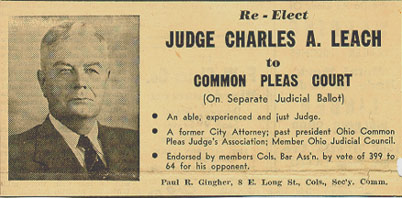
Charles was successful as candidate for the judgeship in 1930.
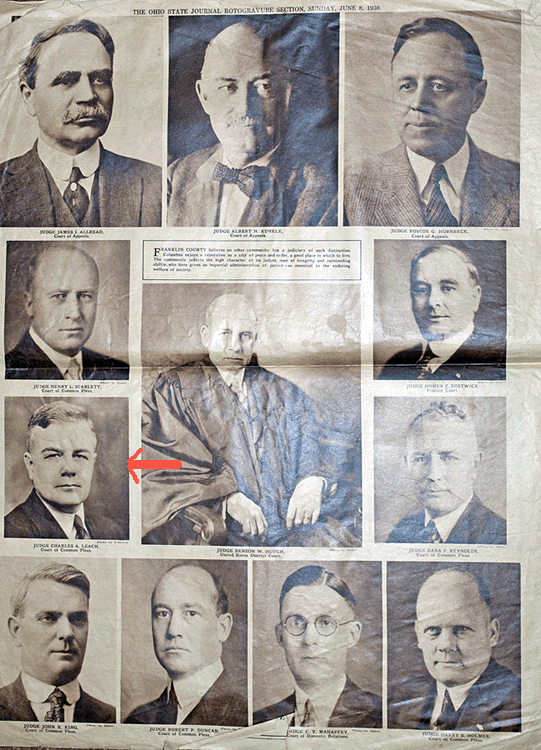
Below: Charles is shown among the others in the judiciary of Franklin County. This paper was the Ohio State Journal Rotogravre Section on Sunday June 8, 1930.
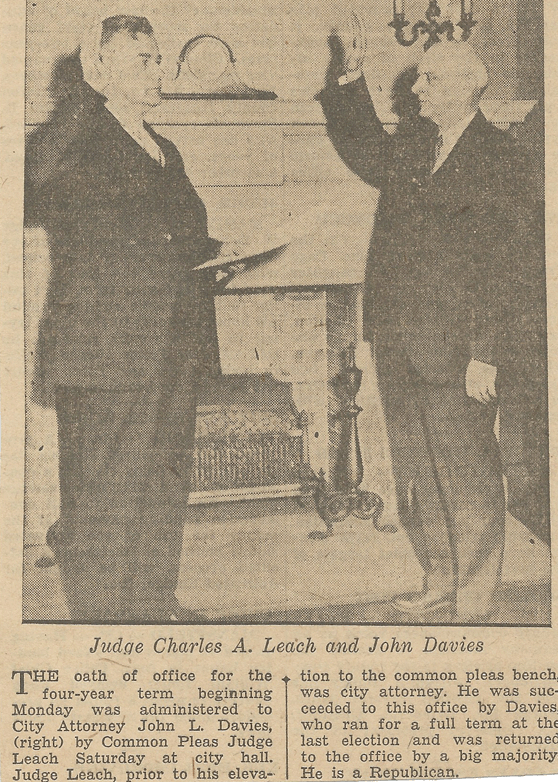
Below: This newspaper article shows and describes Judge Leach swearing in John Davies, the City Attorney who was appointed after Charles was appointed to judge, and who had just been successfully voted into a 4-year term.
The 1930 History of Franklin County featured the "Hon. Charles A. Leach" on pages 1361-1363. To read this document in its entirety, click here.
The 1930 Census shows that Charles was living at 901 Lockbourne Road, owned his $7000 home, and was a judge. He was 49 years old; Hazel was 45. Their four children were Dorothy (20), Robert (18), Jane (10), and Russell (7). [See 1930 US Federal Census] [Note: Sometime prior to 1930, the family had lived at 353 N. Monroe, Columbus, Ohio. Jane and Russell were born at the Monroe home. ]
Below: 901 Lockbourne Rd., Columbus, Ohio.
In 1936 and in the election that followed, Charles was re-elected without opposition, both times receiving large complimentary votes. He continued as Common Pleas judge for 21 years.
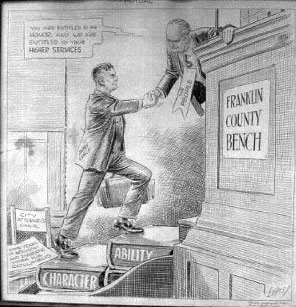
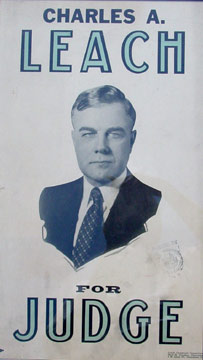
Below Left: Editorial Cartoon titled, “Mutual.” “You are entitled to the HONOR, and we are entitled to your HIGHER SERVICES." Below Right: Campaign Poster
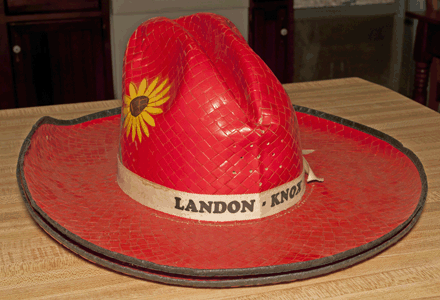
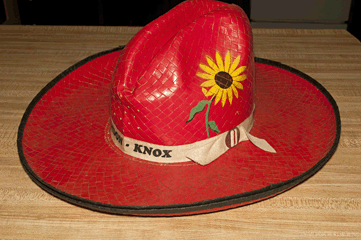
Also running for election in 1936 were Alf Landon for President of the United States and Frank Knox for Vice President. Charles was a fan of these Republican Candidates. Landon, a political moderate and Governor of Kansas, accepted much of Franklin D. Roosevelt's New Deal, but criticized it for waste and inefficiency. Much to Charles' displeasure, Roosevelt, was re-elected. Below are two angles of a hat Charles wore. Note, there are actually two hats (one stacked inside the other) shown here. They were found among Charles' possessions. The hats were donated to the Ohio Historical Society in 2013 by this webmaster.
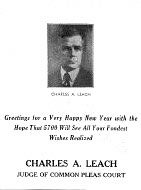
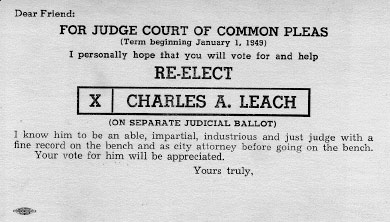
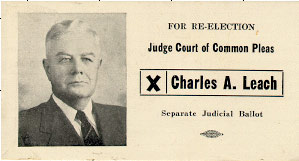
Below: A Holiday Message in the Ohio Jewish Chronicle: "Greetings for a Very Happy New Year with the Hope that 5706 Will See all Your Present Wishes Realized-Charles A. Leach-Judge of Common Pleas Court." Other photographs below are campaign cards & ads.
.
A great deal of information about the interests of Charles can be found in this announcement about an upcoming Torch Club meeting in April 1938. Charles Leach will be the upcoming speaker. The subject: “A column or two about Politics and Government.”
This article states: “Our next Torch meeting comes pretty close to being a birthday party for its speaker, Judge Charles A. Leach, whose birthday has just been passed. Why not call it that? I am sure all would delight in honoring this sincere, hard-working and altogether likeable public official whose record of usefulness is so fine. Judge Leach’s public life has been a series of elections and re-elections, eventually without opposition, because worth has been recognized.
Crane: “What would you rather do, or go fishin’” ? Leach: “Watch Ohio State beat Michigan at football.” There! You can see right away why Leach is a good judge. Favorite indoor sport- “A good cigar, a good book and an easy chair before the fireplace.” ***Favorite outdoor sport-”Auto trips”***Other hobby- “Downtown Football Coaches Association” ***Favorite author- “Victor Hugo”***Favorite magazine-”Saturday Evening Post (even if called lowbrow by some)” ***Favorite artist-”Frederick Remington” ***Favorite composer-”Verdi” ***Favorite food-”Oranges” *** Favorite hours of the day-”Sunrise and after dinner in the evening.” (Sunrise? Is the Jury ready to report?)***Ambition-”To be a Just Judge” ***Pet aversions-”Croomers and brain-trusters” ***Afraid of -”Demagogues” ***First job-”Teaching in one-room country school” (At $25 per month the State Journal says.) ***Best job (most fun)-”My present one-not sure about the fun” ***Hero in history-”Chief Justice John Marshall” ***Present-day hero- “A composite of the U.S. Senators who defeated the Court-packing bill” *** Favorite season and why-”Spring-for freshness” ***Spent last vacation-”Motoring through the South.”
Shall we do a little court packing of our own next Thursday? A bribe is offered- a good dinner and a good speech with plenty of meat in both.”
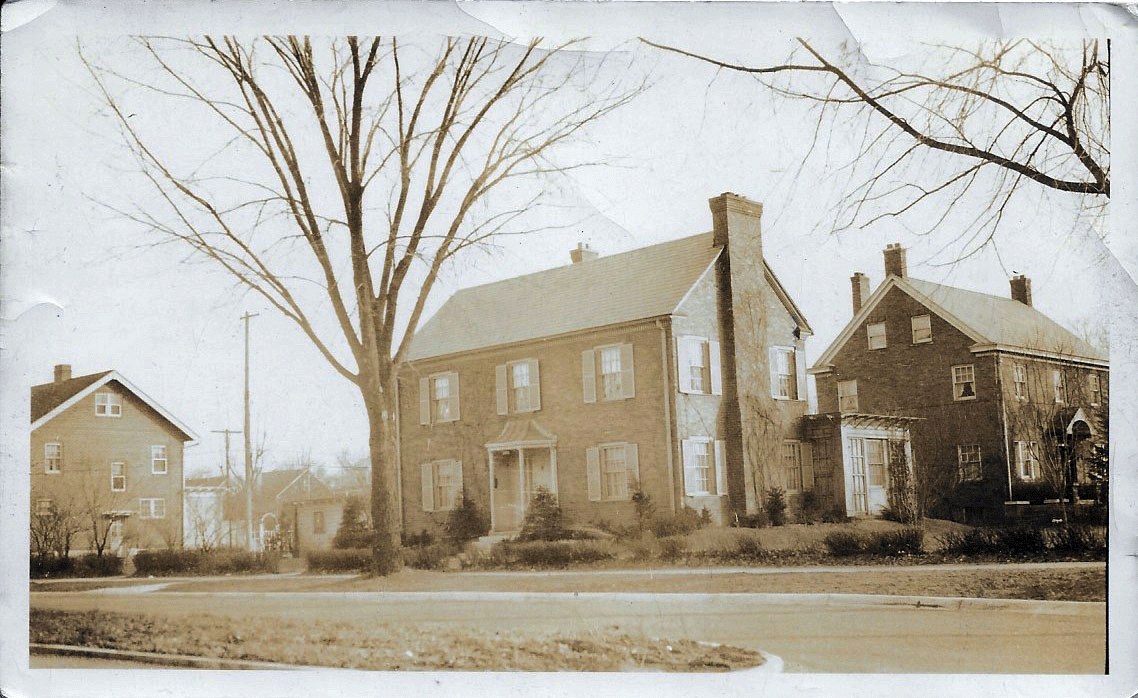
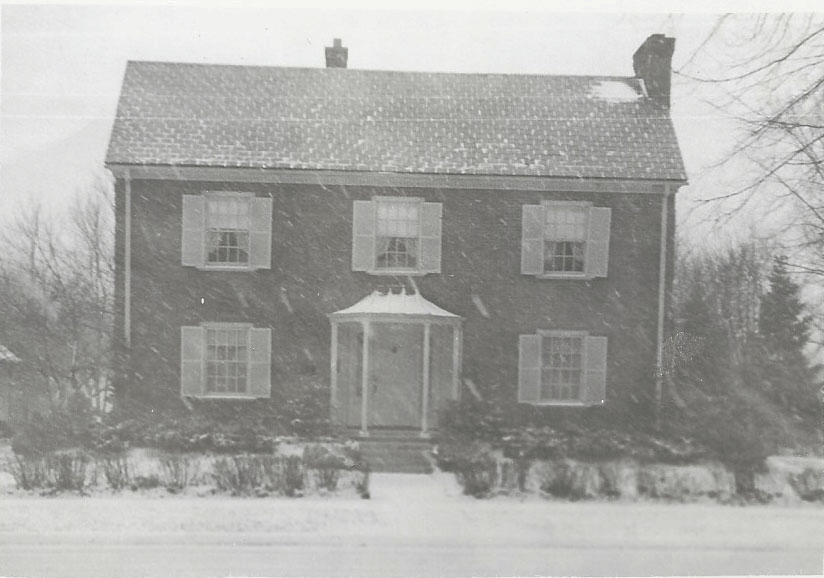
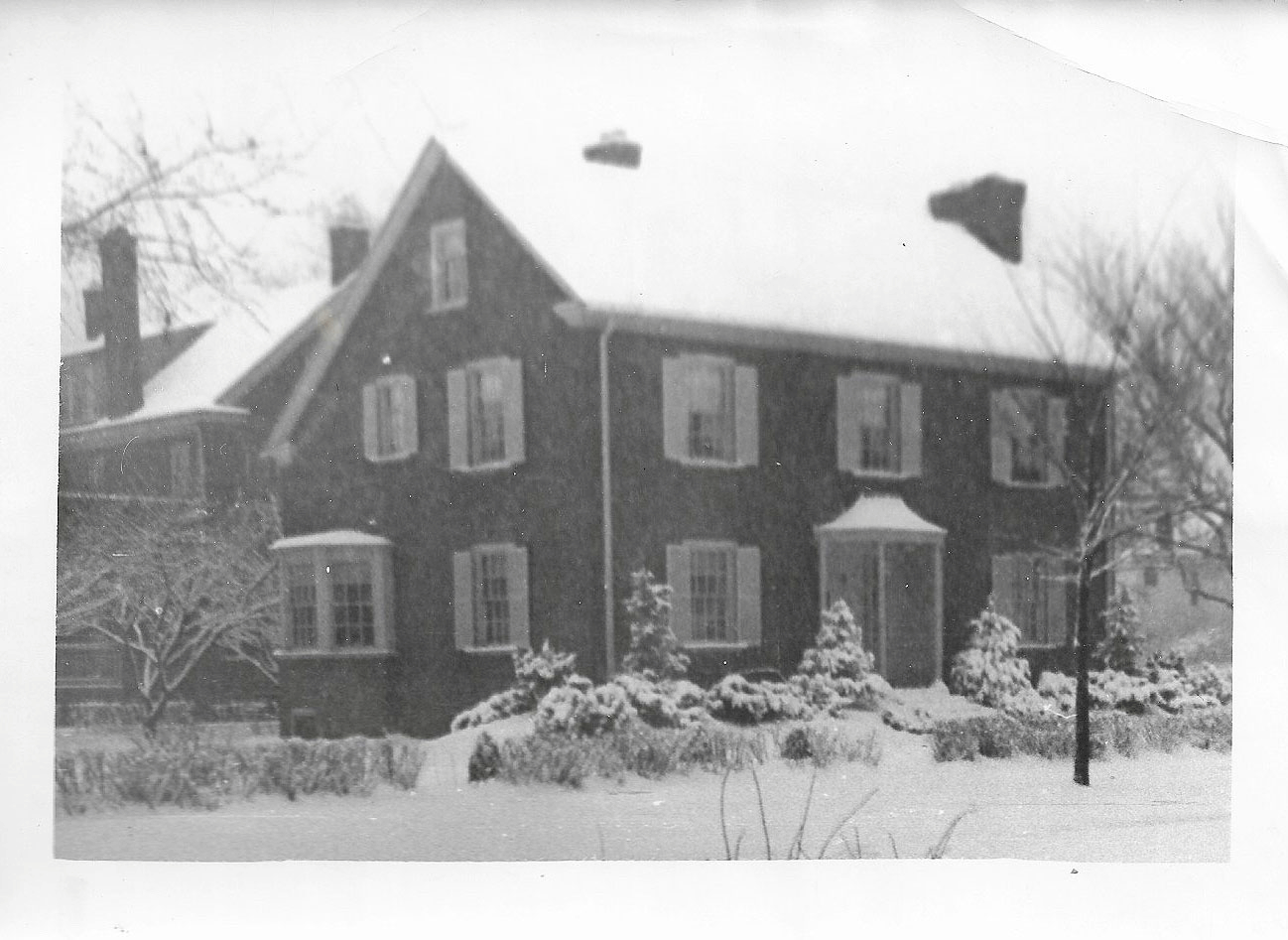
Circa 1937/38, the Leach family moved from Lockbourne Rd in Columbus, Ohio to 2321 Bexley Park in Bexley Ohio. The next three photographs of the Bexley Park House were found in the old trunk that had belonged to Jane Leach Webster. The first image shows fall, the second and third show the winter. [Note in 1938, both Jane and Russell attended Bexley High School].
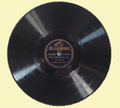
In 1939, Charles and youngest son, Russ, oldest daughter, Dorothy, and wife, Hazel, took a train to the New York World’s Fair. While there, they cut a record of their voices and sent it back home to his oldest son, Bob, and youngest daughter, Jane.
Click on the record below to hear that record. That record was digitized on 7 September 2005 for this website.
Although World War II began with Nazi Germany's attack on Poland in September 1939, the United States did not enter World War II until December 7, 1941 when the Japanese bombed the American fleet in Pearl Harbor, Hawaii. Millions of men living in America completed draft registration cards between 1940 and 1943 as part of the WWII draft. Both of Charles' sons, Robert and Russell, served in the United States Army during this war.
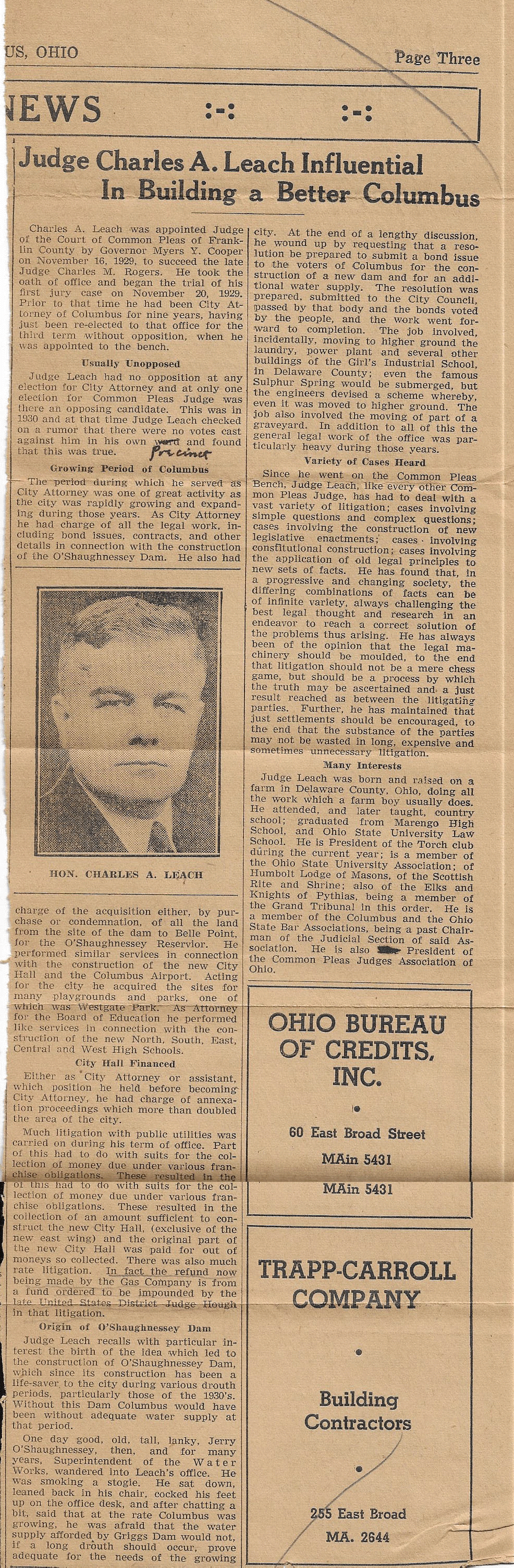
In the Daily Reporter, dated 6 February 1942, an article is titled “Judge Charles A. Leach Influential In Building a Better Columbus”. A quote from this article is as follows: “Judge Leach recalls with particular interest the birth of the idea which led to the construction of O’Shaughnessey Dam, which since its construction has been a life-saver to the city during various drought periods, particularly those of the 1930’s. Without this dam Columbus would have been without adequate water supply at that period. One day good, old, tall, lanky, Jerry O’Shaughnessey, then, and for many years, Superintendent of the Water Works, wandered into Leach’s office. He was smoking a stogie. [Note: According to his grandson, Steve, Charles smoked Dutch Master cigars] He sat down, leaned back in his chair, cocked his feet up on the office desk, and after chatting a bit, said that at the rate Columbus was growing, he was afraid that the water supply afforded by Griggs Dam would not, if a long drought should occur, prove adequate for the needs of the growing city. At the end of a lengthy discussion, he wound up by requesting that a resolution be prepared to submit a bond issue to the voters of Columbus for the construction of a new dam and for an additional water supply. The resolution was prepared, submitted to the City Council, passed by that body and the bonds voted by the people, and the work went forward to completion. The job involved incidentally, moving to higher ground the laundry, power plant and several other buildings of the Girl’s Industrial School, in Delaware County; even the famous Sulphur Spring would be submerged, but the engineers devised a scheme whereby, even it was moved to higher ground. The job also involved the moving of part of a graveyard. In addition to all of this, the general legal work of the office was particularly heavy during those years.”
Below is another article with the same theme. This article was found in an old trunk belonging to Jane Leach Webster.
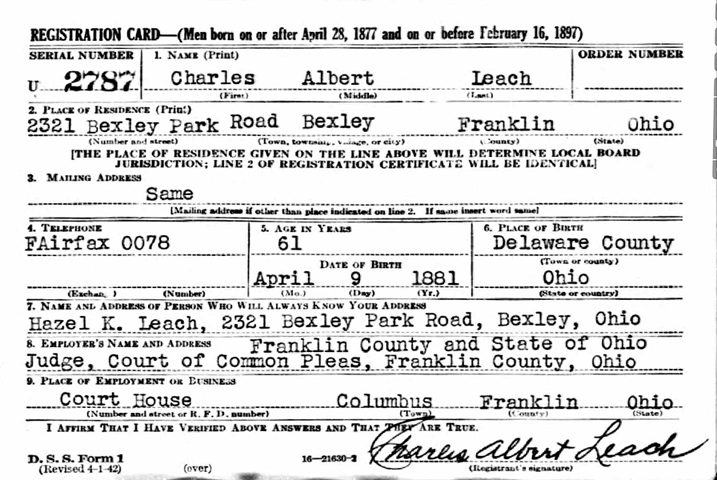
On April 27, 1942, the fourth registration (known as the "Old Man's Draft") was required of men between the ages of 42 and 64. Charles was 61. He registered as shown below, but was never called to duty.
Below: Charles' Registration Card shows the Serial Number is 2787. Charles Albert Leach is living at 2321 Bexley Park Road, Bexley, Franklin, Ohio. The mailing address is the same as the place of residence. The telephone number is Fairfax 0078. His age in years is 61. The place of birth is Delaware County, Ohio. The date of his birth: April 9, 1881. The name and address of person who will always know your address: Hazel K. Leach, 2321 Bexley Park Road, Bexley, Ohio. The employer's name and address are : Franklin County and State of Ohio Judge, Court of Common Pleas, Franklin County, Ohio. The place of employment or business: Court House Columbus, Franklin Ohio. Charles signed the card.
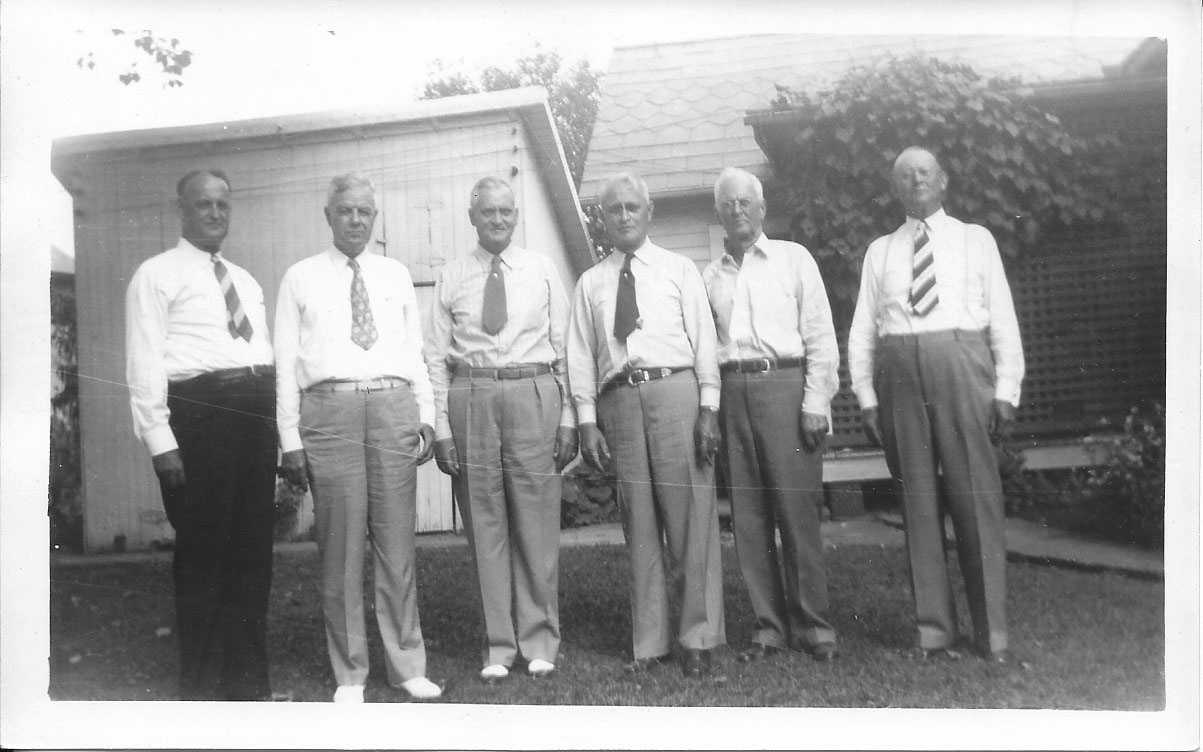
The year when the photographs below were taken is unknown. But here, Charles is shown at far left in the first photograph and second from left in the second photograph) with some friends. These photographs were found in the old trunk that had belonged to Jane Leach Webster.
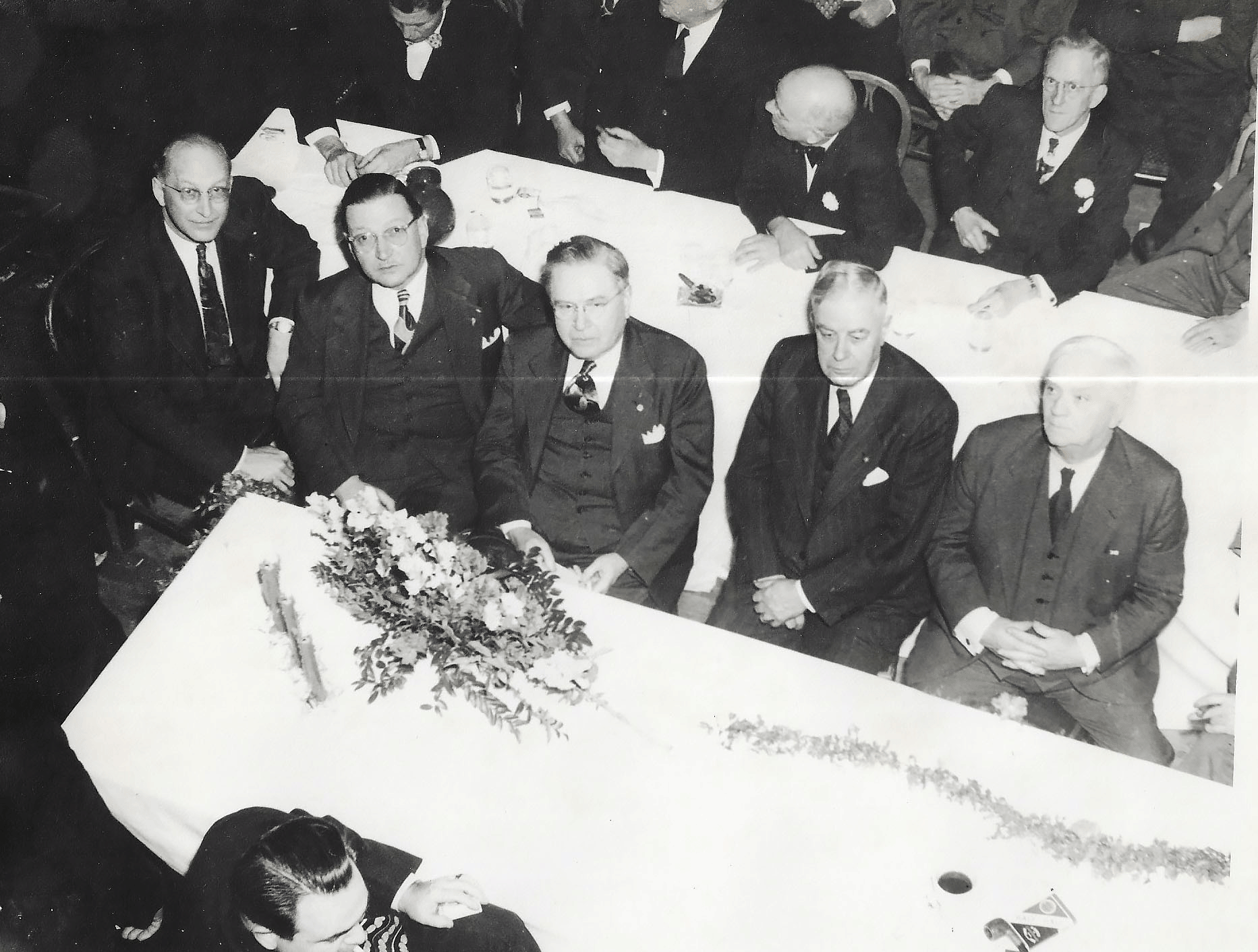
The year when the photograph below was taken is also unknown. Charles (2nd from right in the front row) is shown at a luncheon. This photograph was found in the old trunk that had belonged to Jane Leach Webster.
Below: In 1943, Charles' youngest daughter, Jane Leach Webster, gave birth to the first grandchild in the Leach family... Steven Charles Webster. Steven and Jane lived with Charles, Hazel, and Dorothy at Bexley Park Road during World War II. Steven's father, Charles Clare Webster, and his uncles Russell and Robert were all away, serving in the US Army. This photograph was found in an old trunk that had belonged to Jane.
I
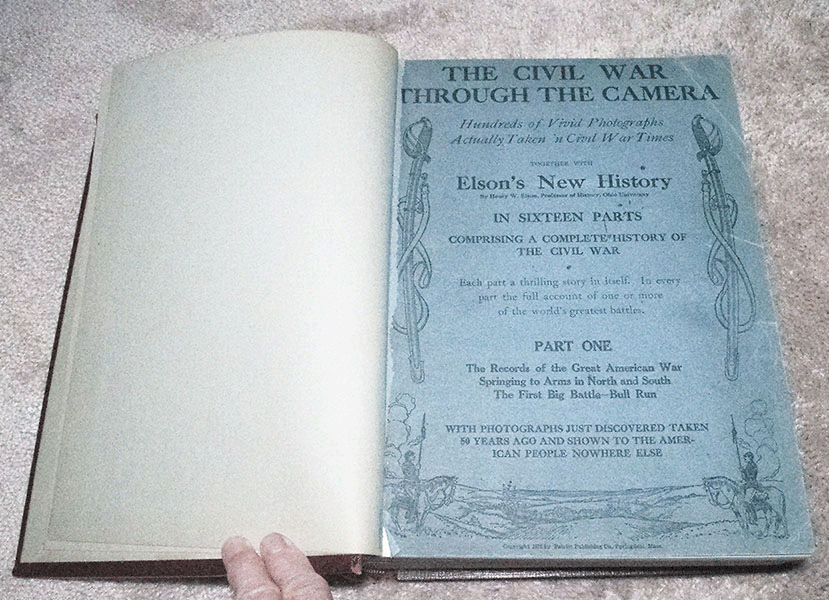
In 2023, Steve (at the age of 80) related to the webmaster that our grandfather read books to him all the time when he was young. Steve was 7 years old when Charles died. One of the favorite books was about the Civil War, and was titled, The Civil War Through The Camera Parts 1-16. Steve attributes his own love for reading to his early experiences with his grandfather. Steve has kept this particular book all these years and gave it to the webmaster for safe keeping.
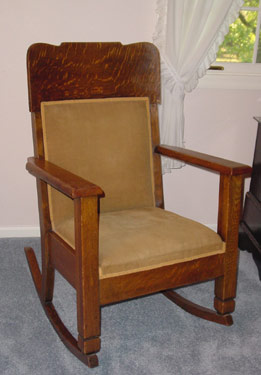
Below: Left: Hazel, Charles, and daughter, Dorothy on February 18, 1945. (The day after son, Russell, married Helen Sharpe in Greensboro, NC). Middle: Charles: The distinguished judge. Right: Charles’ rocking chair.
Click on the record below to hear Charles talk about Ohio's Court System. The original recording of Judge Charles Leach was found in a collection of 78 recordings belonging to Russell Leach. The radio interview of his father took place some time prior to 15 August 1950 (the date Charles died). Susan Leach Snyder (#2) had the recording digitized 7 September 2005.
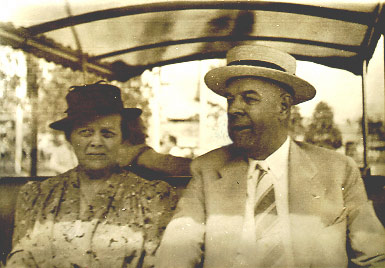
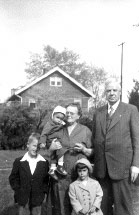
Below Left: Hazel and Charles in later life. Right: Hazel and Charles with their grandchildren, Steve Webster, Susan Leach, and baby Terry Leach 1950. His grandchildren called Charles “Grampie.”
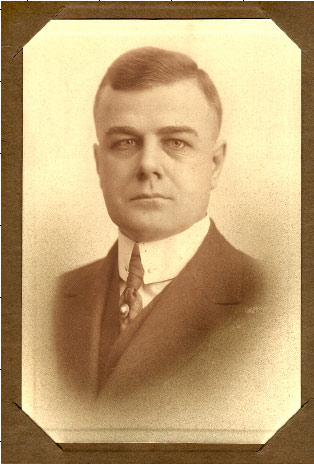
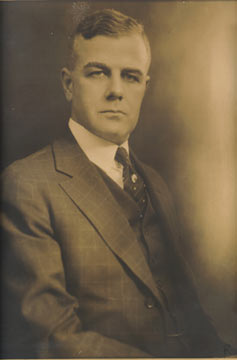
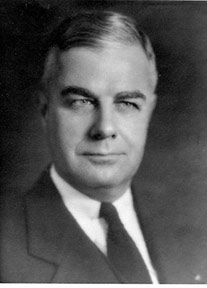
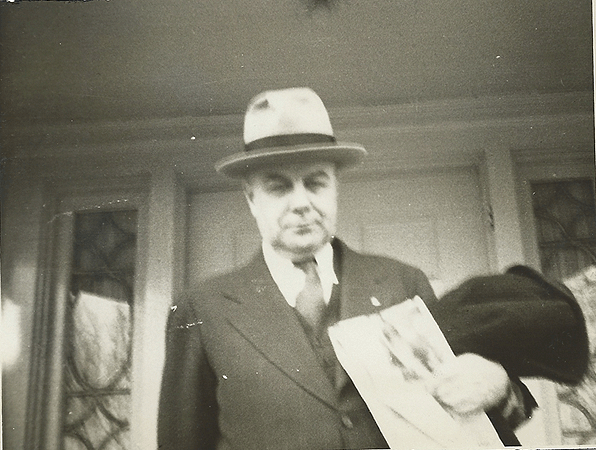
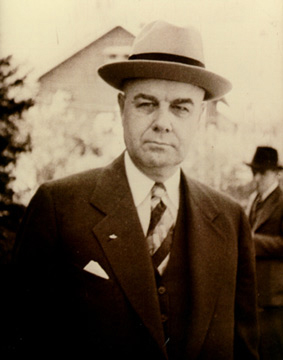
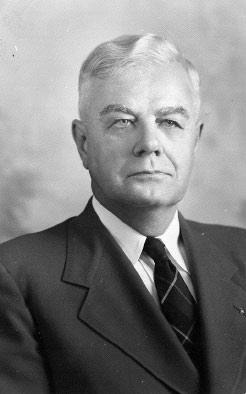
Below: Charles: circa 1950.
On July 15, 1950, Charles was trimming bushes in the park in the middle of his street (Bexley Park). He suffered a heart attack. He never recovered, and a gall bladder attack contributed to his death on August 15, 1950. His death certificate states that the disease/condition that lead directly to his death was coronary thrombosis; antecedent cause: arteriosclerosis; other significant conditions ch. cholecystitis.
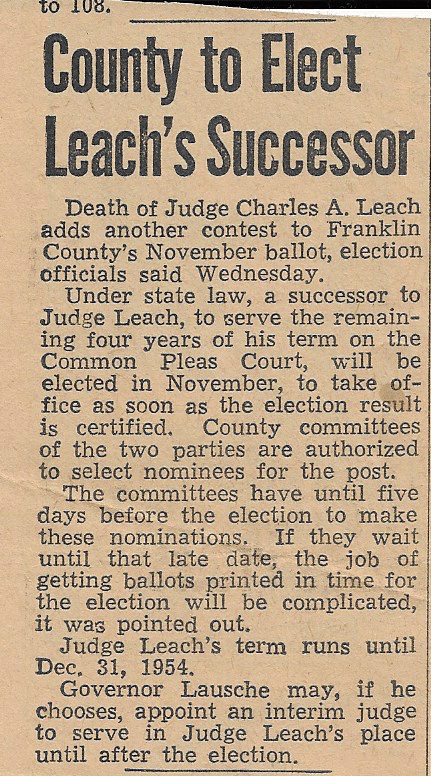
When he died, Charles was remembered fondly in newspapers.
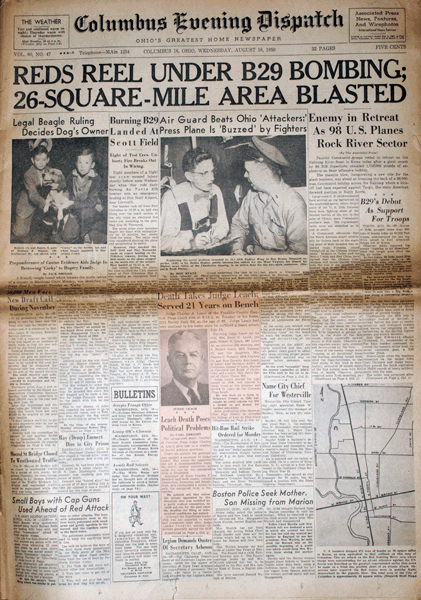
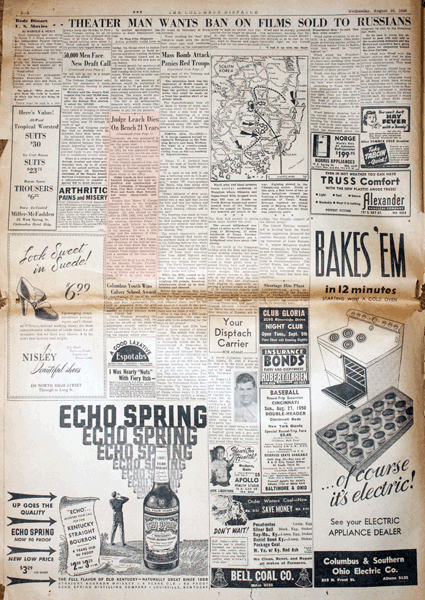
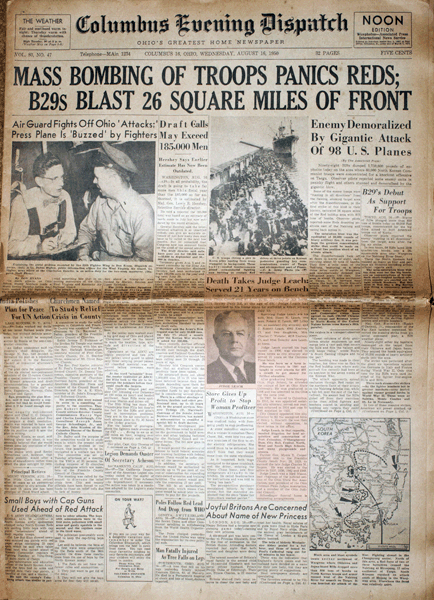
On August 16th, two editions of the Columbus Evening Dispatch, published articles about Charles' death on the front page, along with news from the Korean Conflict. Details in one of the editions continued onto page 2 of the paper. To read enlarged images of these documents, click on the images.
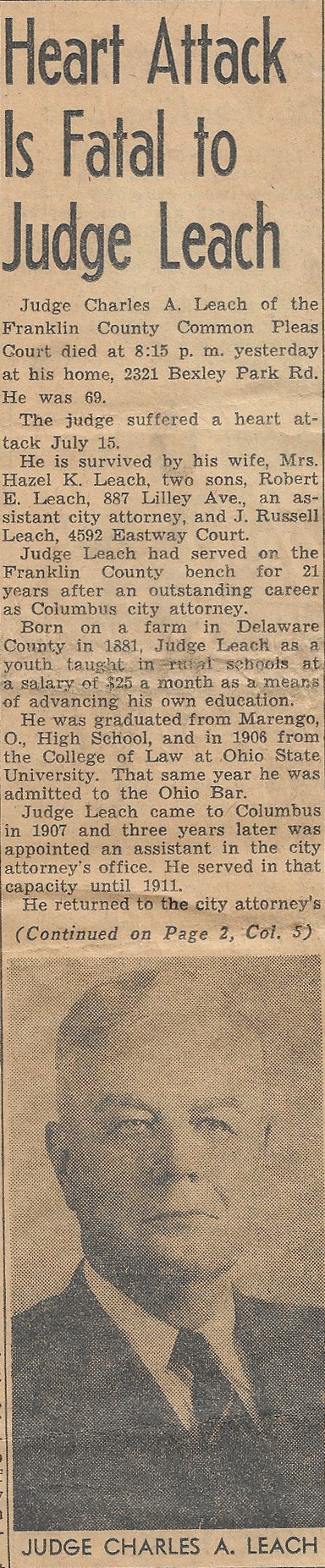
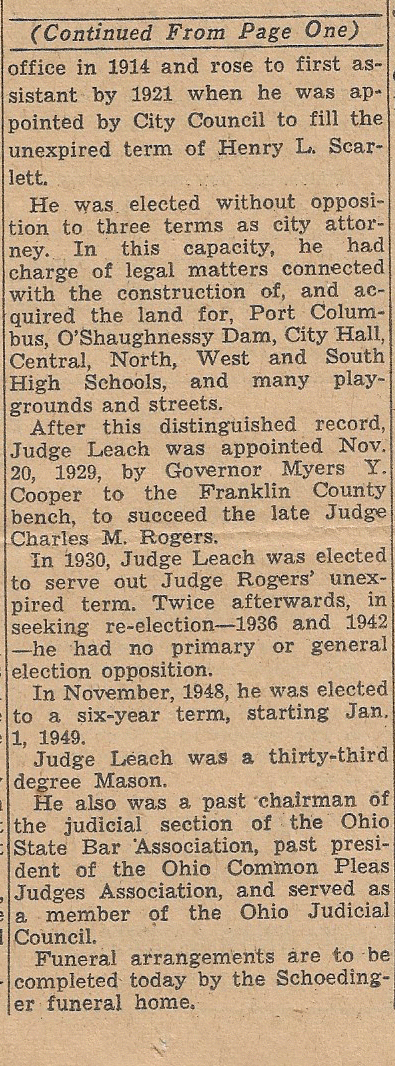
The newspaper that printed the article below is unknown. The date of the publication was August 16th, 1950. (This article and the next 4 were found among the possessions of his sister, Belva, and are courtesy of Belva's granddaughter, Sharon Hinckley.
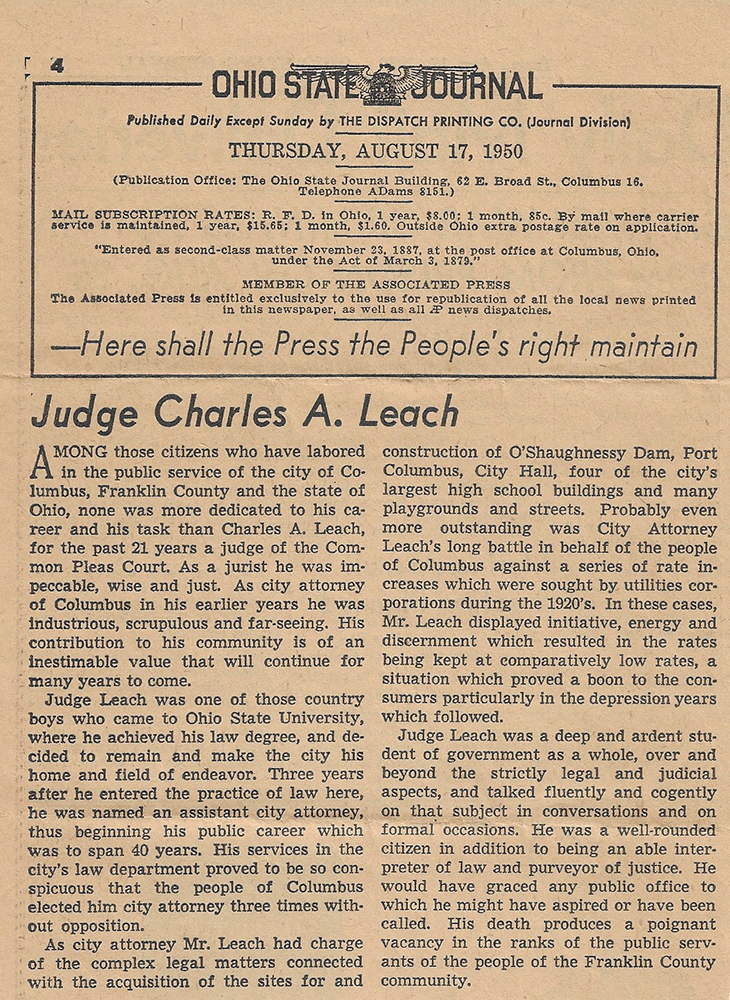
On August 17, The Ohio State Journal included an article titled, "Judge Charles A. Leach". In the article, they told about his life, and all that he'd contributed to Franklin County, Ohio.
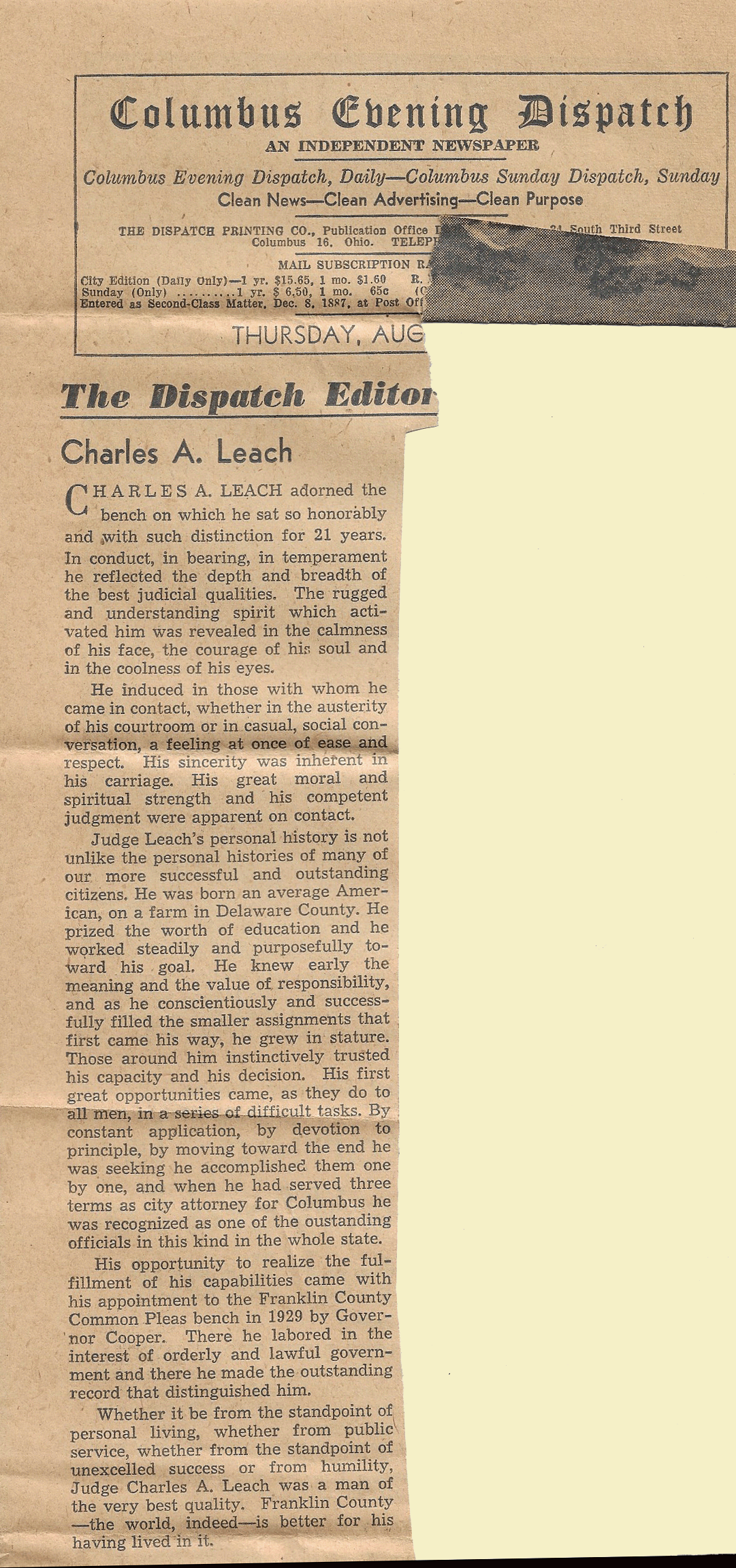
On August 17th the Columbus Evening Dispatch included the article below titled, “Charles A. Leach.” It states, “Charles A. Leach adorned the bench on which he sat so honorably and with such distinction for 21 years. In conduct, in bearing, in temperament he reflected the depth and breadth of the best judicial qualities. The rugged and understanding spirit which activated him was revealed in the calmness of his face, the courage of his soul and in the coolness of his eyes. He induced in those with whom he came in contact, whether in the austerity of his courtroom or in casual, social conversation, a feeling at once of ease and respect. His sincerity was inherent in his carriage. His great moral and spiritual strength and his competent judgment were apparent on contact. Judge Leach’s personal history is not unlike the personal histories of many of our more successful and outstanding citizens. He was born an average American, on a farm in Delaware County. He prized the worth of education and he worked steadily and purposefully toward his goal. He knew early the meaning and the value of responsibility, and as he conscientiously and successfully filled the smaller assignments that first came his way, he grew in stature. Those around him instinctively trusted his capacity and his decision. His first great opportunities came, as they do to all men, in a series of difficult tasks. By constant application, by devotion to principle, by moving toward the end he was seeking he accomplished them one by one, and when he had served three terms as city attorney for Columbus he was recognized as one of the outstanding officials in this kind in the whole state. His opportunity to realize the fulfillment of his capabilities came with his appointment to the Franklin County Common Pleas bench in 1929 by Governor Cooper. There he labored in the interest of orderly and lawful government and there he made the outstanding record that distinguished him. Whether it be from the standpoint of personal living, whether from public service, whether from the standpoint of unexcelled success or from humility, Judge Charles A. Leach was a man of the very best quality. Franklin County--the world, indeed--is better for his having lived in it.” [The webmaster has highlighted this sentence, as it is an incredible tribute to her grandfather.]
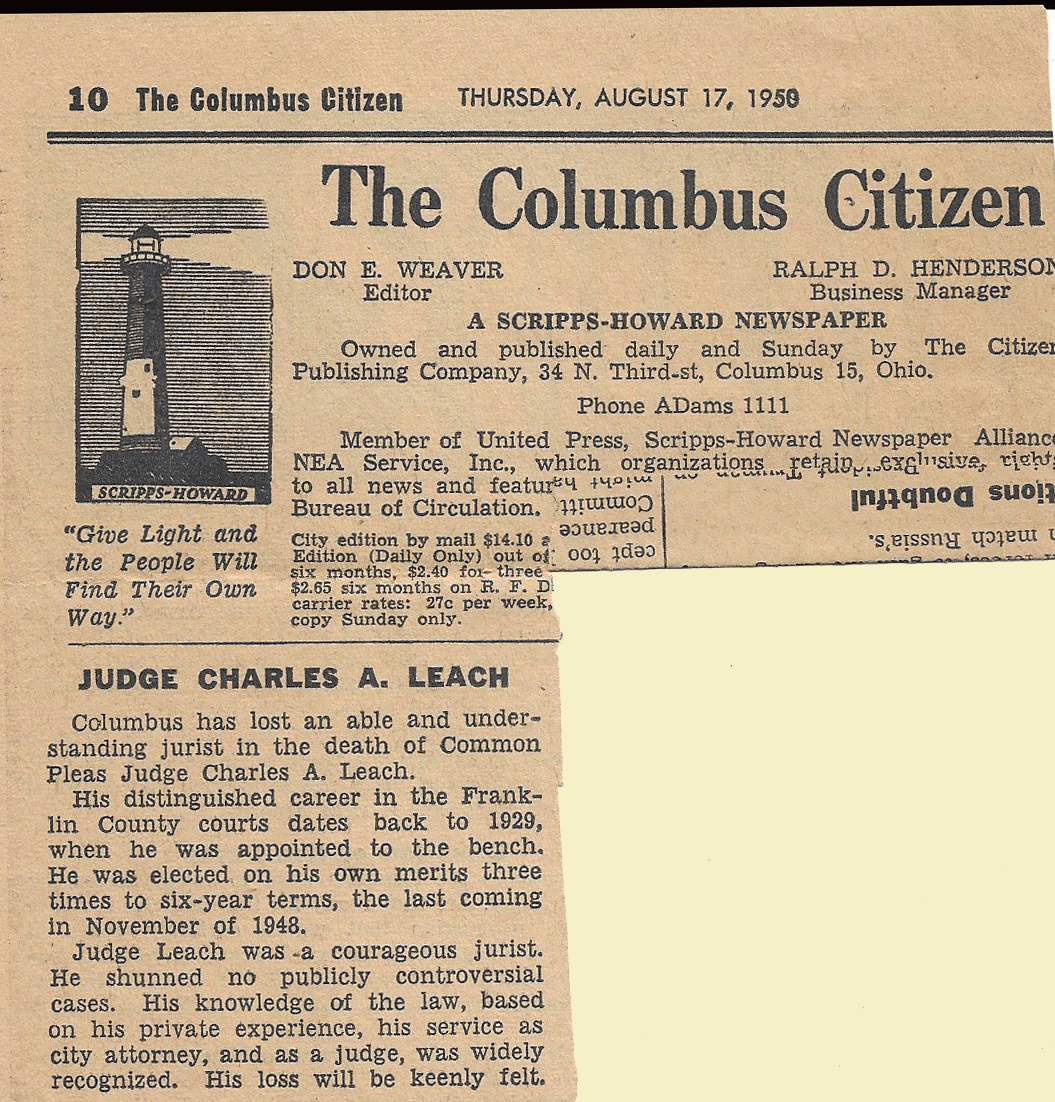
The article below appeared in the Columbus Citizen on August 17th.
The newspaper that printed the article below is unknown. The date of the publication is also unknown.
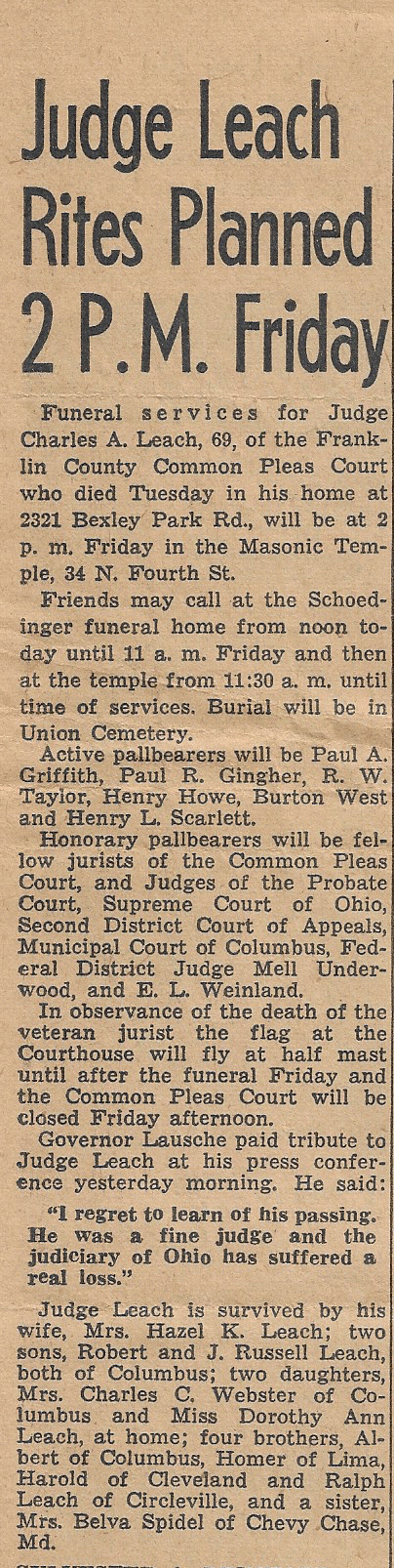
On Thursday, August 17, 1950 another article (unknown publication) was titled, “Flag at Half Mast for Judge Leach." “In tribute to Common Pleas Judge Charles A. Leach, the flag at the Franklin County Court House will fly at half mast until after his funeral Friday afternoon. Judge Leach died Tuesday at his home, 2321 Bexley Park-av, at the age of 69. He had been on the Common Pleas bench for 21 years. Services will be held at 2 P.M. Friday in the Masonic Temple, 34 N. Fourth-st. Burial will be in Union Cemetery. Friends may call at the Schoedinger funeral home until 11 a.m. Friday, and at the Masonic Temple from 11:30 a.m. until time of services. Active pallbearers will be Paul A. Griffith, Paul R. Gingher, R.W. Taylor, Henry Howe, Burton West and Henry L. Scarlett. Honorary pallbearers will be his fellow jurists of the Common Pleas Court and judges of the Probate Court, Ohio Supreme Court, Second District Court of Appeals, Municipal Court of Columbus, Federal District Judge Mell Underwood and E. L. Winland. Common Pleas Court will be closed Friday afternoon.”
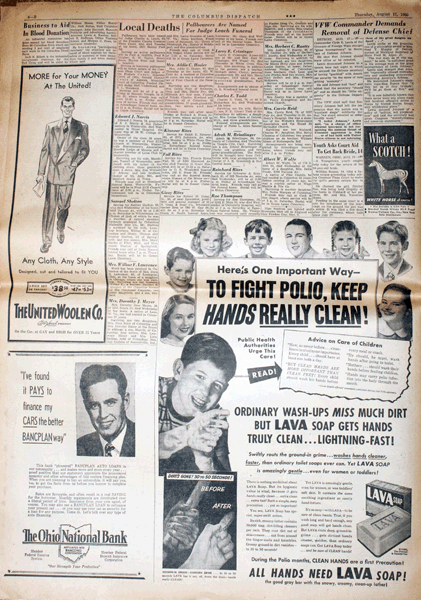
The Columbus Dispatch on August 17th gave details about his pallbearers on page 6B. To read the enlarged image, click on it..
The newspaper that printed the article below is unknown. The date of the publication is also unknown. (This news article was found among the possessions of his sister, Belva, and is courtesy of Belva's granddaughter, Sharon Hinckley.)
The following is quoted from an article in the Columbus Dispatch on 3 September 1950, following Charles’ death. The article was titled, “In Praise of Judge Leach” “They buried Judge Charles A. Leach--they’ll never bury the memories many of us have of a square-shooting, hardworking, devoted judge. The bench, the bar and the public have lost a real servant in Judge Leach’s passing. In my 23 years of association with him, I’ve never seen him shirk his duties, never swerve from his devotion to justice in its fullest sense.
For him, politics had no place on the bench, which is as it should be. The writer valued Judge Leach, not only as a judge, but as a treasured friend.--Columbus...Sam Fusco”
Photos of the tombstones were taken 8/15/01
After his death, the Kentucky State Bar Journal asked and was permitted by one of Charles' sons, Robert, to republish a paper written by Charles, titled "Trial Atmosphere." The article ("Trial Atmosphere") was published in the journal edition: March 1953, Volume 17, No 2, pgs 83-87. To read the article in its entirety, click here.
Lifetime Events Summary for Charles Albert Leach:
Contact person for this website is Susan Snyder: signalizations@gmail.com

-Law-Class2.jpg)