Oleander Moth
Syntomeida epilas
Oleander Moth
Syntomeida epilas
Photographs by Susan Leach Snyder
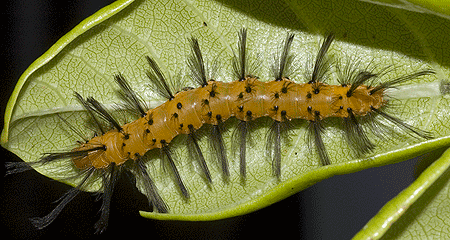
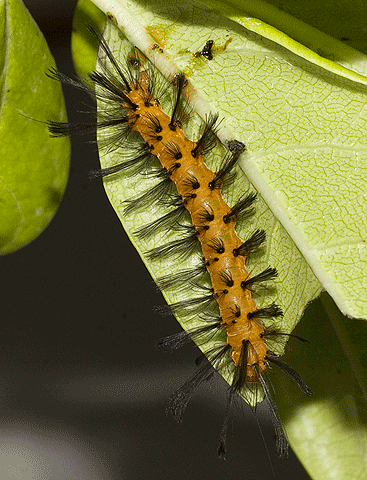
On April 12, 2008, a wild allamanda plant was purchased for the garden. As it was being planted, an Oleander Moth caterpillar was spotted on the underside of a leaf and pictures were taken.
Note the orange body and long black tufts of "hairs." The caterpillar's head is at the bottom of the leaf in the photograph at left, and you can see where it has been eating.
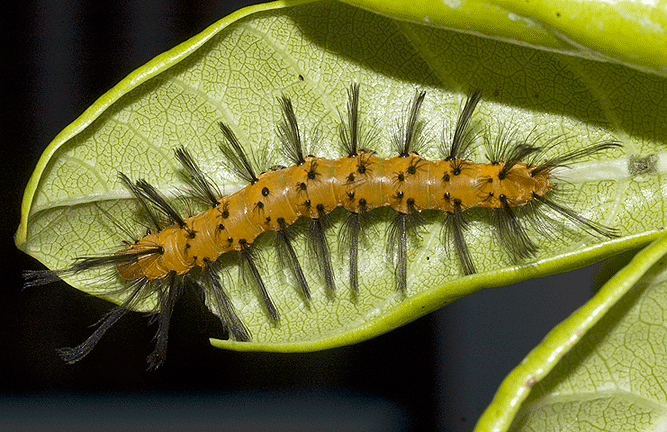
In the picture below, guess which end is the head end. What are your clues?
Oleander Moth caterpillars like to eat oleander, wild allamanda, and mandevilla; therefore, mother moths lay their eggs on these plants. These caterpillars are voracious eaters. Oleander caterpillar infestations can severely damage Oleander shrubs.
At about 2-inches in length, the caterpillar will create a cocoon.
The Oleander Moth is also called the Polka-Dot Wasp Moth and the Uncle Sam Moth because in its adult form, its abdomen is tipped in red, the wings and the rest of its abdomen are blue, and both the abdomen and wings have white dots. Its long, narrow wings give it a distinctive wasp shape.
Unlike most other moths, these moths fly during the day. Adults have two defense mechanisms. First, since they resemble (mimic) wasps, many predators avoid them. Second, those that have eaten oleander as caterpillars have consumed a toxic chemical that may make them distasteful.
The complete life cycle takes about two months. No adult moths have been spotted in the garden.
___________________________________
Links:
Index to Butterfly and Moth Visitors to the Conservancy Ecotone Trail
Index To Photographs of Plants in the Gardens
Conservancy of Southwest Florida Ecotone Home Page
Conservancy of Southwest Florida Home Page.
Please report errors to Susan Snyder at susanleachsnyder@gmail.com