Long-tailed Skipper
Urbanus proteus proteus
Photographs by Susan Leach Snyder
Long-tailed Skipper
Urbanus proteus proteus
Photographs by Susan Leach Snyder
All adult skippers have moth-like bodies that are thick and furry. Their wings are triangular and their antennae end in knobs with tiny hooks. Skippers get their name from their flight pattern of darting from one place to another.
Eggs of the long-tailed skipper are pale yellow and laid singly on the bottom of the leaves of host plants. Common beggar-ticks, panicled ticktrefoil, and wisteria are some of these plants. All of these plants are legumes (beans). In several gardens along the Ecotone Trail, beggar-ticks and panicled ticktrefoil are growing, but we have not found any eggs.
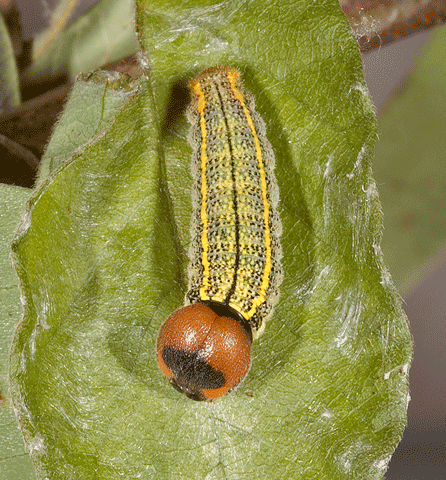
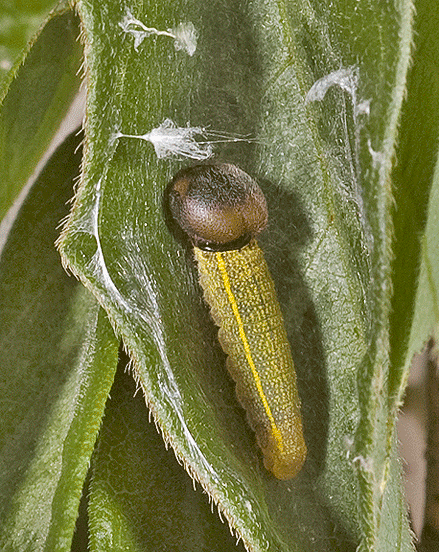
Long-tailed skipper caterpillars have smooth skins and large heads. Each caterpillar is yellow-green with yellow stripes on its side and a dark stripe down its back. On April 2, 2009 a caterpillar (about 1/8 long and shown at right) was located inside a curled panicled ticktrefoil leaf in Garden 13. The long-tailed skipper caterpillar is called the bean leaf roller because it constructs a shelter by folding over small sections of a host plant leaf and tying the ends together with silk. Note the silk threads on the leaf that kept the leaf folded in half. The leaf had to be peeled opened to reveal its hidden treasure.
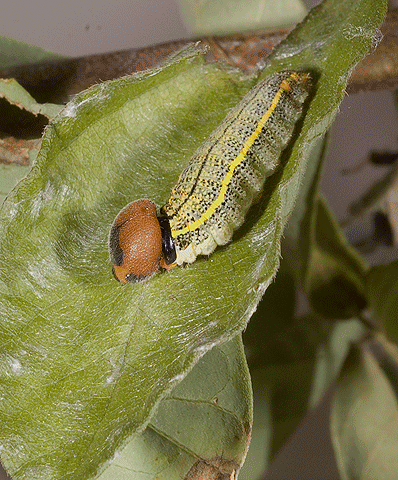
As shown below, on April 9, 2009, the caterpillar was 3/4 of an inch long. Besides increasing in length, it coloration was more vivid. Again, the leaf had to be peeled apart to take these photos. Note that the leaf was molded around its body.
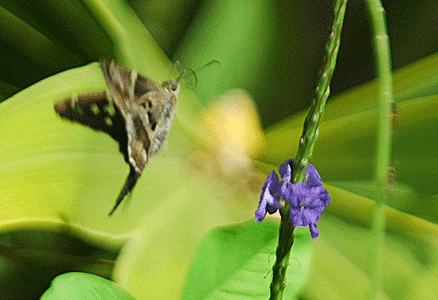
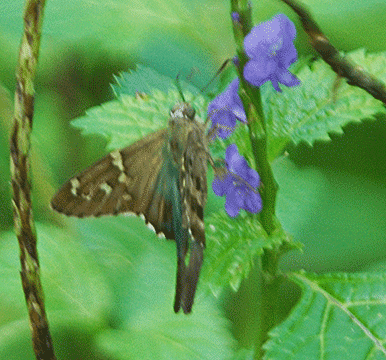
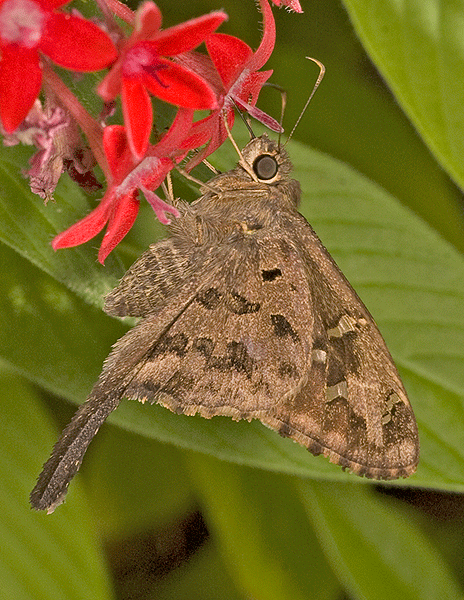
The adult butterflies are most commonly seen along the Ecotone Trail in the fall when large numbers migrate to Florida from northern states. At left a long-tailed skipper was photographed flying to get nectar from a porterweed blossom in Garden 1.
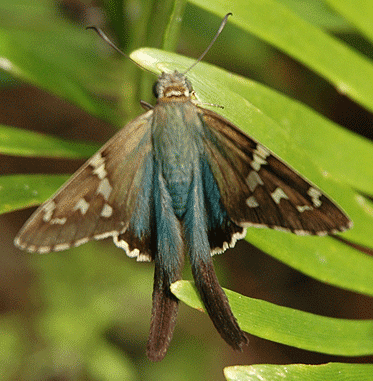
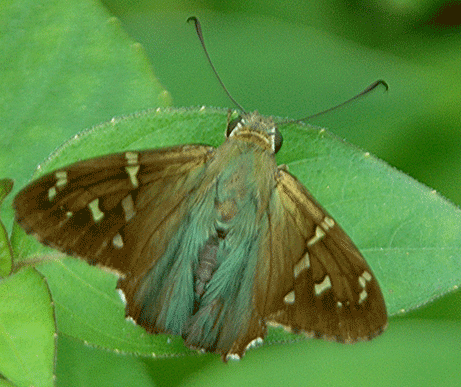
The long-tailed skipper gets its name from the long "tails" on its hind wings.
Another distinctive characteristic of this butterfly is the blue scales on its abdomen and at the base of its hind wings. The butterfly at left is thought to be a long-tailed skipper that has lost its tails. Perhaps a predator attacked it... or perhaps the tails just never developed. Whatever the case, it's a strange looking long-tailed skipper.
___________________________________
Links:
Index to Butterfly and Moth Visitors to the Conservancy Ecotone Trail
Index To Photographs of Plants in the Gardens
Conservancy of Southwest Florida Ecotone Home Page
Conservancy of Southwest Florida Home Page.
Please report errors to Susan Snyder at susanleachsnyder@gmail.com