Gulf Fritillary
Agraulis vanillae
Gulf Fritillary
Agraulis vanillae
Photographs by Susan Leach Snyder
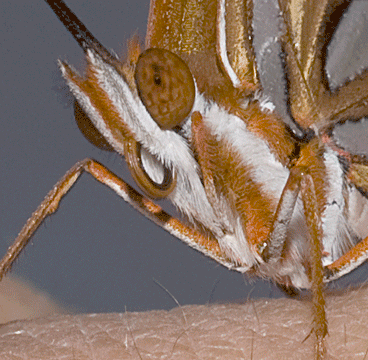
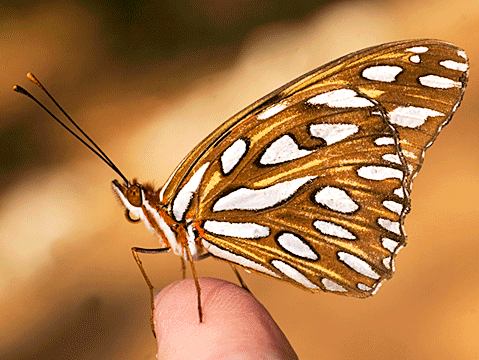
Like the Julia and Zebra Longwing butterflies, Gulf Fritillaries are called brush-footed butterflies because their first pair of legs are modified into brushes. The female butterfly uses these brushes to scrape plant leaves and taste plant chemicals. In the photograph at right, one of this Gulf Fritillary's brush feet is shown folded under its eye.
When a female identifies the host plants for her caterpillars, she begins laying her yellow eggs singly on these plants. The host plants for Gulf Fritillary caterpillars are a variety of passion flower species. To date, we have found no eggs in the Conservancy butterfly garden.
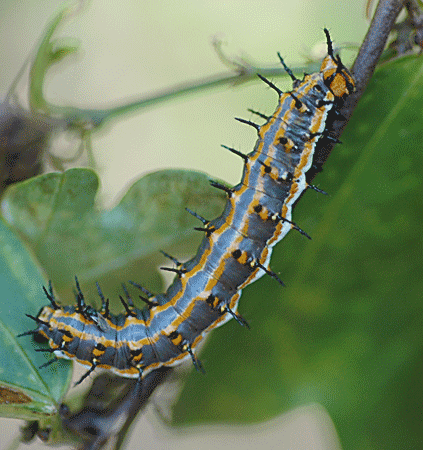
As shown at left, Gulf Fritillary caterpillars are very colorful. This caterpillar's head and thin stripes along its body are orange; its thicker bands are blue- gray. Its black branched spines are very noticeable. Other Gulf Fritillary caterpillars may have wider bands of orange and thinner bands of black. This photograph was taken at Lovers Key State Park. To date we have not spotted any caterpillars in our garden.
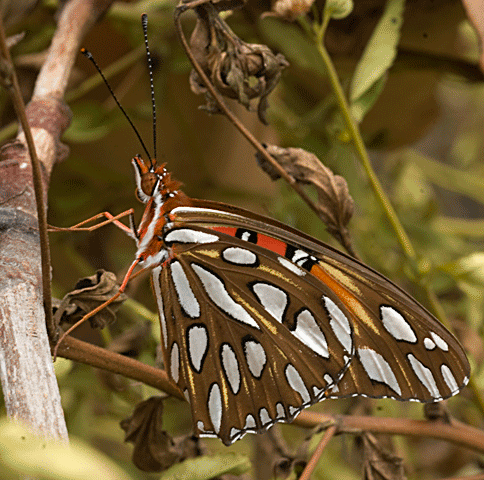
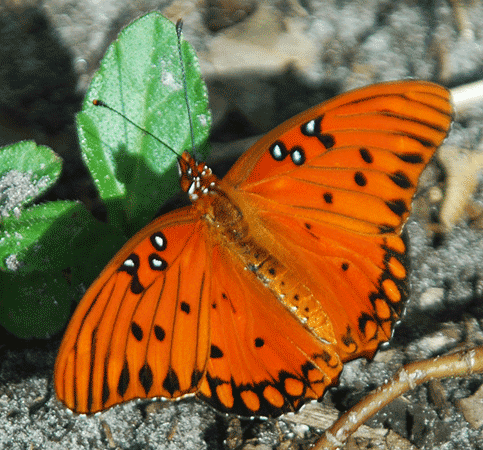
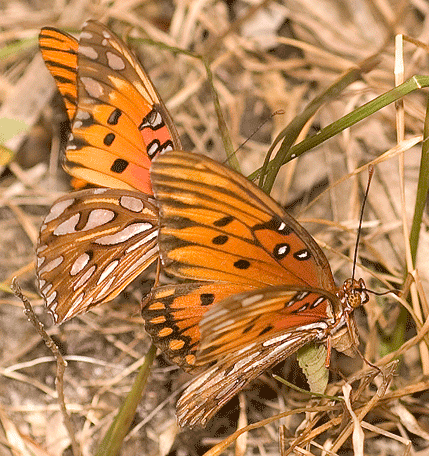
Below Left: With its wings open, an adult Gulf Fritillary is bright orange with black markings and three white spots on each forewing. The hind wing has a black and orange chain-like border. Below Right: With its wings folded, the underside of the Gulf Fritillary's wing is brown and yellow with long silver-white spots, outlined in black.
At left, a pair prepare to mate.
Gulf Fritillary butterflies are migratory and winter in Southern Florida, where they live in disturbed areas, eating nectar from a variety of colorful flowers. They especially like lantana.
___________________________________
Links:
Index to Butterfly and Moth Visitors to the Conservancy Ecotone Trail
Index To Photographs of Plants in the Gardens
Conservancy of Southwest Florida Ecotone Home Page
Conservancy of Southwest Florida Home Page.
Please report errors to Susan Snyder at susanleachsnyder@gmail.com