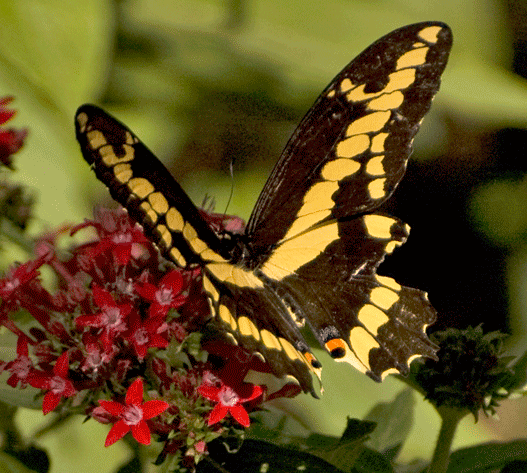
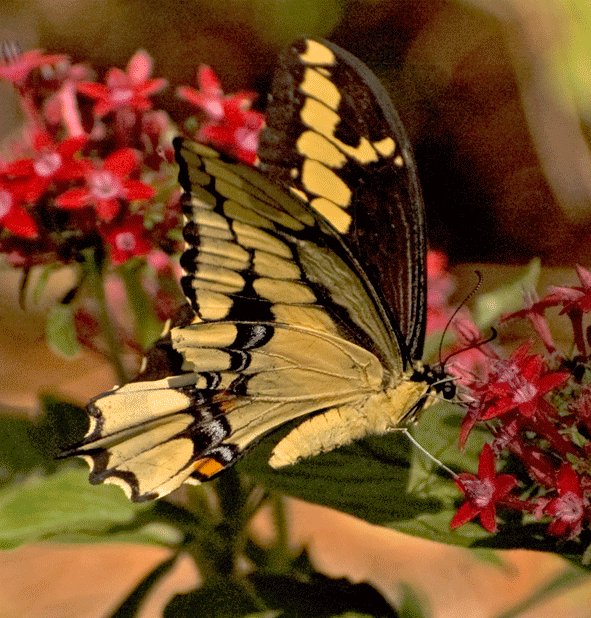
Giant Swallowtail
Papilio cresphontes
Photograph by Susan Snyder
Giant Swallowtail
Papilio cresphontes
Photograph by Susan Snyder
On February 25, 2009, a giant swallowtail was spotted sucking nectar from red pentas in Garden 1. The "tails" along its hind wings were missing, and it was apparent that this individual had done battle with a bird. As it was feeding, flitting from blossom to blossom, the swallowtail hovered like a hummingbird and never stopped beating its wings. To stop motion for the photographs on this web page, the speed of the camera was set for 1/2000 th of a second.
The sex of the butterfly is not known, but it is hoped that it was a female and that it chose some of the many wild lime trees in our gardens, or perhaps the Hercules Club in Garden 8, as targets on which to lay its amber-brown eggs. Giant swallowtail eggs are laid singly on the upper side of host leaves.
If eggs were laid, they would have hatched into tiny caterpillars resembling bird droppings, mottled in brown, yellow, and cream colors. Each caterpillar has a bright orange organ on the top of its head called the osmeterium. This organ emits an odor that repels enemies. After time, caterpillars pupate and hang by silken girdle threads from tree branches. Each giant swallowtail chrysalis looks like a piece of wood. Eventually the skin of the chrysalis cracks and an adult emerges.
Adults of this species have the upper surface of their wings predominately chocolate brown with yellow markings, and the bottom surface of their wings predominately yellow with blue, red, and black markings. The thorax and abdomen are yellow.
Photograph at left by Susan Snyder.
In July, 2015, Roz Katz, another Horticulture Volunteer at the Conservancy of Southwest Florida observed and photographed the Giant Swallowtail below, also feeding on Pentas. This individual has the "tails" on its hind wings.
___________________________________
Links:
Index to Butterfly and Moth Visitors to the Conservancy Ecotone Trail
Index To Photographs of Plants in the Gardens
Conservancy of Southwest Florida Ecotone Home Page
Conservancy of Southwest Florida Home Page.
Please report errors to Susan Snyder at susanleachsnyder@gmail.com