Frangipani Hornworm Moth
Pseudosphinx tetrio
Photographs by Susan Leach Snyder
Frangipani Hornworm Moth
Pseudosphinx tetrio
Photographs by Susan Leach Snyder
The frangipani hornworm moth is a common moth in the American tropics and subtropics in lowland habitats. Its range is from southern Brazil to south Florida, southern Mississippi, Arkansas, Texas, and
southern Arizona.
Female moths lay 50 to 100 eggs in clusters on leaves of host plants that include frangipani (Plumeria spp.), other members of the dogbane family, and rubber vine. Each egg is ellipsoidal in shape, pale green in color, and not sculptured except for minute punctures on its surface.
Once the eggs hatch, the caterpillars begin eating. The frangipani caterpillar featured on this web page was spotted in the Conservancy Hammock Trail in the spring of 2009. It was placed in an aquarium and fed rubber vine and wild allamanda. The Hammock Trail is located immediately adjacent to the Ecotone Trail.
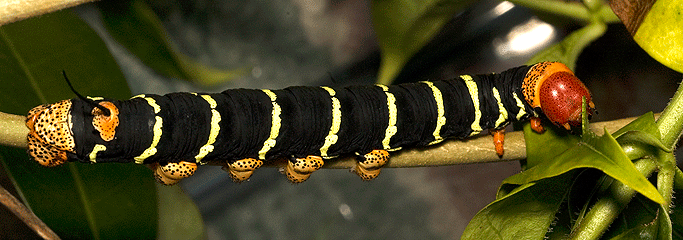
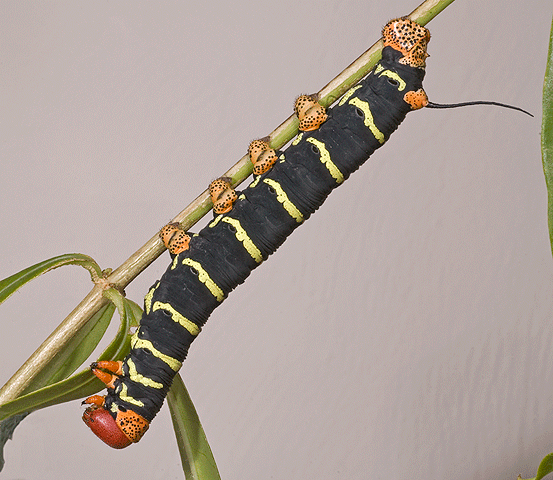
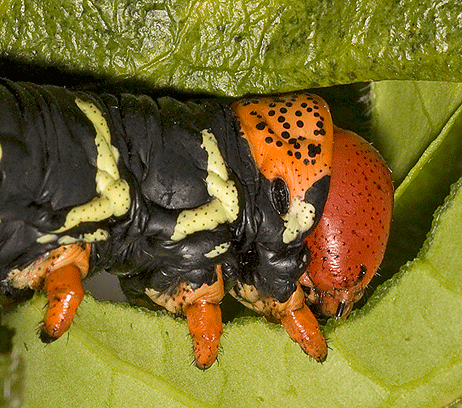
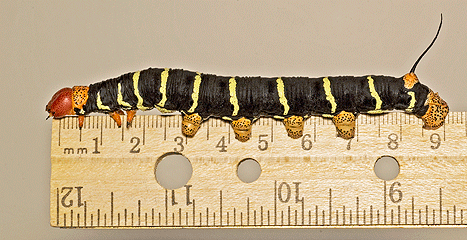
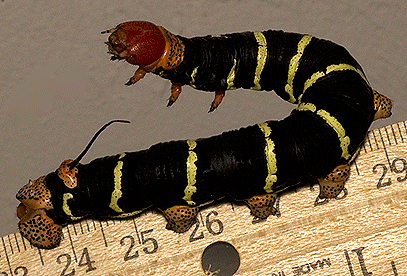
As shown in these photographs, the caterpillar is velvety black with yellow rings and a reddish-orange head. A caterpillar can grow up to 6 inches in length. Each 6-inch caterpillar has a one- inch long black “horn” on its 8th abdominal segment. The horn is located on an elevated orange “button." The caterpillar's legs and prolegs are orange and speckled with black spots.
The caterpillar's color pattern is a warning sign to predators that they are toxic. Some of the caterpillar's host plants produce white, toxic latex that the frangipani caterpillars are able to detoxify and use for defense purposes. Most potential predators avoid eating these caterpillars, however some cuckoo birds in Belize feed on them by biting off their heads, dangling them upside down, and letting the poison drip out. The frangipani caterpillar is considered a coral snake mimic in Costa Rica. They wave their heads back and forth like snakes when disturbed, and they bite when handled.
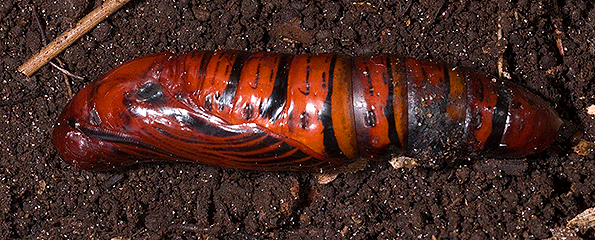
The caterpillar photographed above eventually molted to the pupal stage. A newly formed pupa is yellow. After 2-3 hours, brown spots appear on the surface. Coloration eventually darkens to a yellowish-brown with lateral dark stripes on the thorax and rings on the abdomen. The pupa's final color is a uniform dark reddish-brown as shown at left. This pupa was 7 cm long.
Although the aquarium-reared caterpillar collected at the Conservancy pupated, it never developed into an adult. Adults normally molt from pupae in leaf litter or subterranean chambers.
An adult frangipani moth has brownish forewings, each with a dark spot and blurry gray and white markings. Its dorsal hind wings are dark brown with white markings along the inner margin and the lower half of the outer margin. The body is striped with transverse grey-white bands and wider black bands. The wingspan averages 12.7 to 14 cm. Female moths are typically larger than males and lighter in color.
Several adult flights occur in Florida from March to September. Adults are known to feed on the nectar of rosy or sea periwinkle (Vinca rosea L.). Gribel and Hay (1993) recorded frangipani moth adults nectaring on Caryocar brasiliense Cambess in Brazil and suggested that this moth may be a minor pollinator along with bats for that plant species. The moths land on the flower and collect nectar with their relatively short proboscis. As they do this, they come into contact with the plant's reproductive structures.Adult moths are attracted to lights and flowers at night.
___________________________________________
Links:
Index to Butterfly and Moth Visitors to the Conservancy Ecotone Trail
Index To Photographs of Plants in the Gardens
Conservancy of Southwest Florida Ecotone Home Page
Conservancy of Southwest Florida Home Page.
Please report errors to Susan Snyder at susanleachsnyder@gmail.com